Houston Speech and Hearing Center - Life Changing Decisions
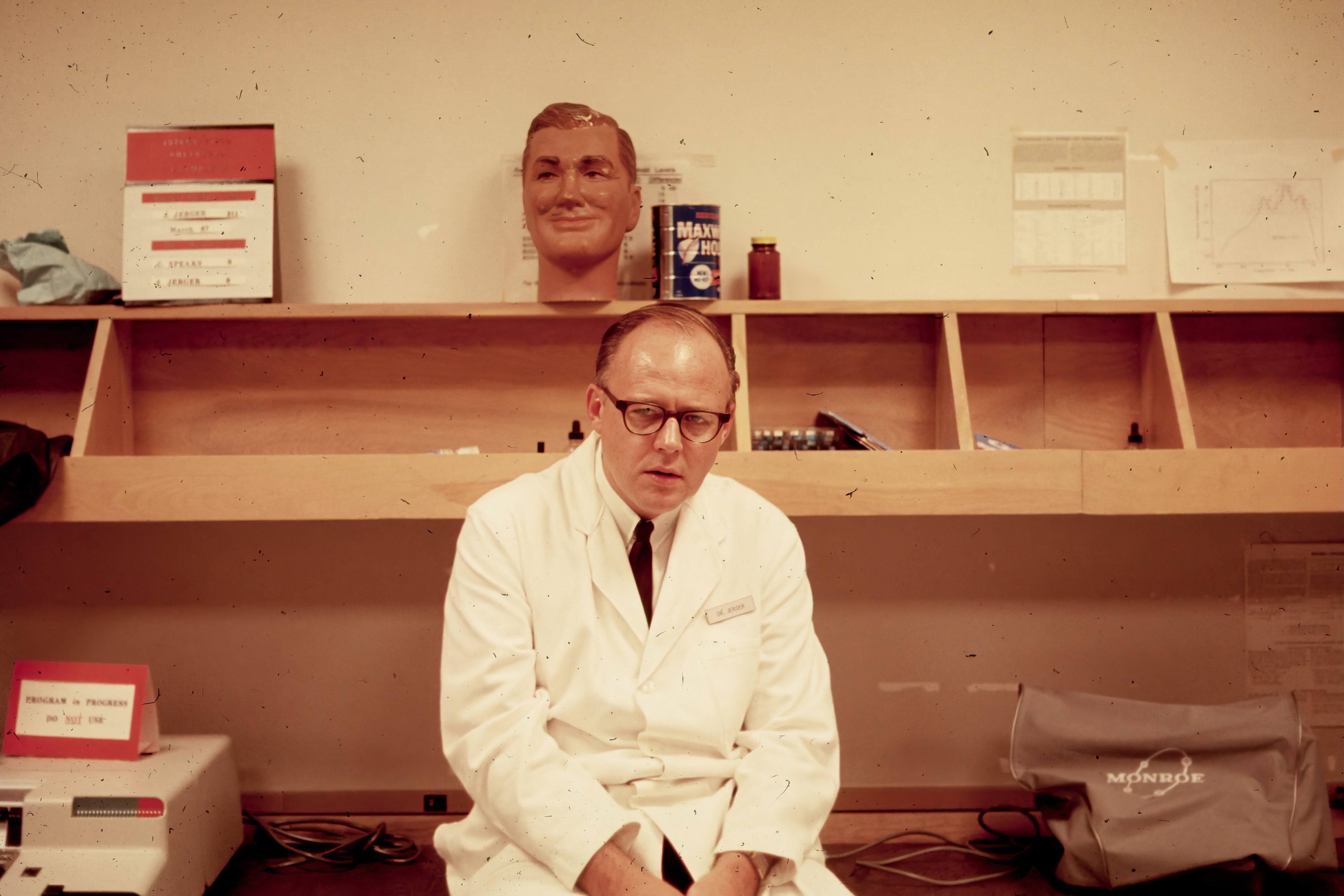
Somewhere else in this narrative I mention that Nelson Hatt arranged for me to replace him at the Houston Speech and Hearing Center in the Houston Medical Center. What a great part-time job. This job funded me, and then Kathy and me, from ’66 through ’69.
My job had two aspects at first, growing over time to three. The urgent part was to letter graphs and charts for slides and publications. I used a LeRoy lettering set.
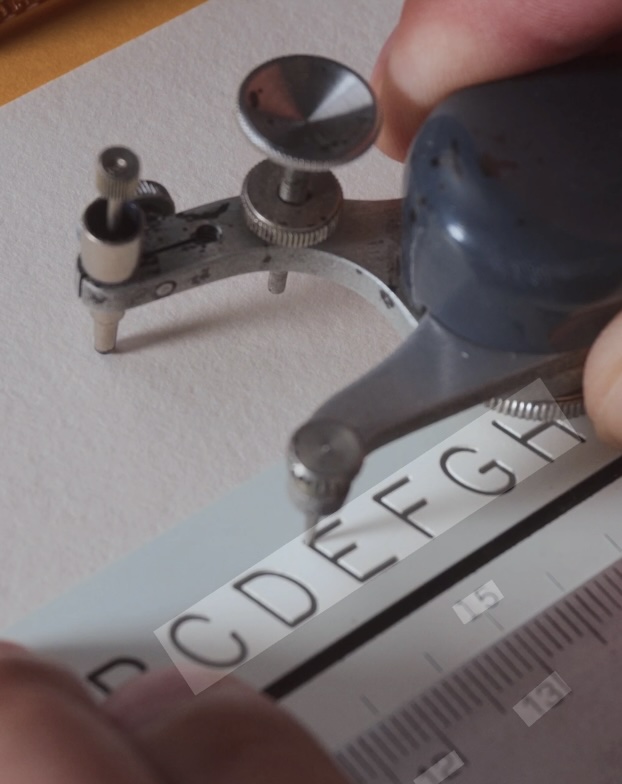
This was tedious work, and I am a tediophobe, so it was not my funnest thing to do. I always lettered with India ink — one drop on the chart or graph and start over. Could sometimes recover with Liquid Paper.
The second part was to serve as the electronics technician, building, repairing, and maintaining all of the research equipment. That was fun, especially the designing and building.
Dr. Jerger recognized something in me and gave me some actual research assignments, and that changed my life. Doing real research work to understand and improve the lives of other humans seemed like a worthy challenge.
The best research project I set up and ran was to use vertex potentials to detect hearing loss in infants. When the auditory system detects a sound, it generates electrical signals that travel from the cochlea up through the brainstem to the cortex. Electrodes placed at the vertex (top of the skull) pick up the cortical response — a characteristic waveform with peaks labeled P1, N1, P2, N2 — appearing roughly 50–300 milliseconds after the sound. Because the response is objective (the infant doesn’t have to do anything), it became a critical tool for testing babies who can’t cooperate with behavioral hearing tests, which aren’t reliable until around 7–9 months of age.
It was fun work. At one point Kathy was paid — we needed the bucks — to be a research subject for me. The downside was that I had to shave a small spot at the vertex of her skull to attach the electrode. She was not joyous about the end result: little spiky hairs growing back in.
Doing this work and working with this great team of scientists — there were four or five MDs and postdocs doing primary research under Jim’s direction — I felt led toward a career in the biomedical engineering field. For sure I would have to go to grad school for my PhD. That motivated me to bear down on my studies at Rice. In this same period I met and fell in love with Kathy, and the idea of marrying and supporting her also drove me to do better in school.
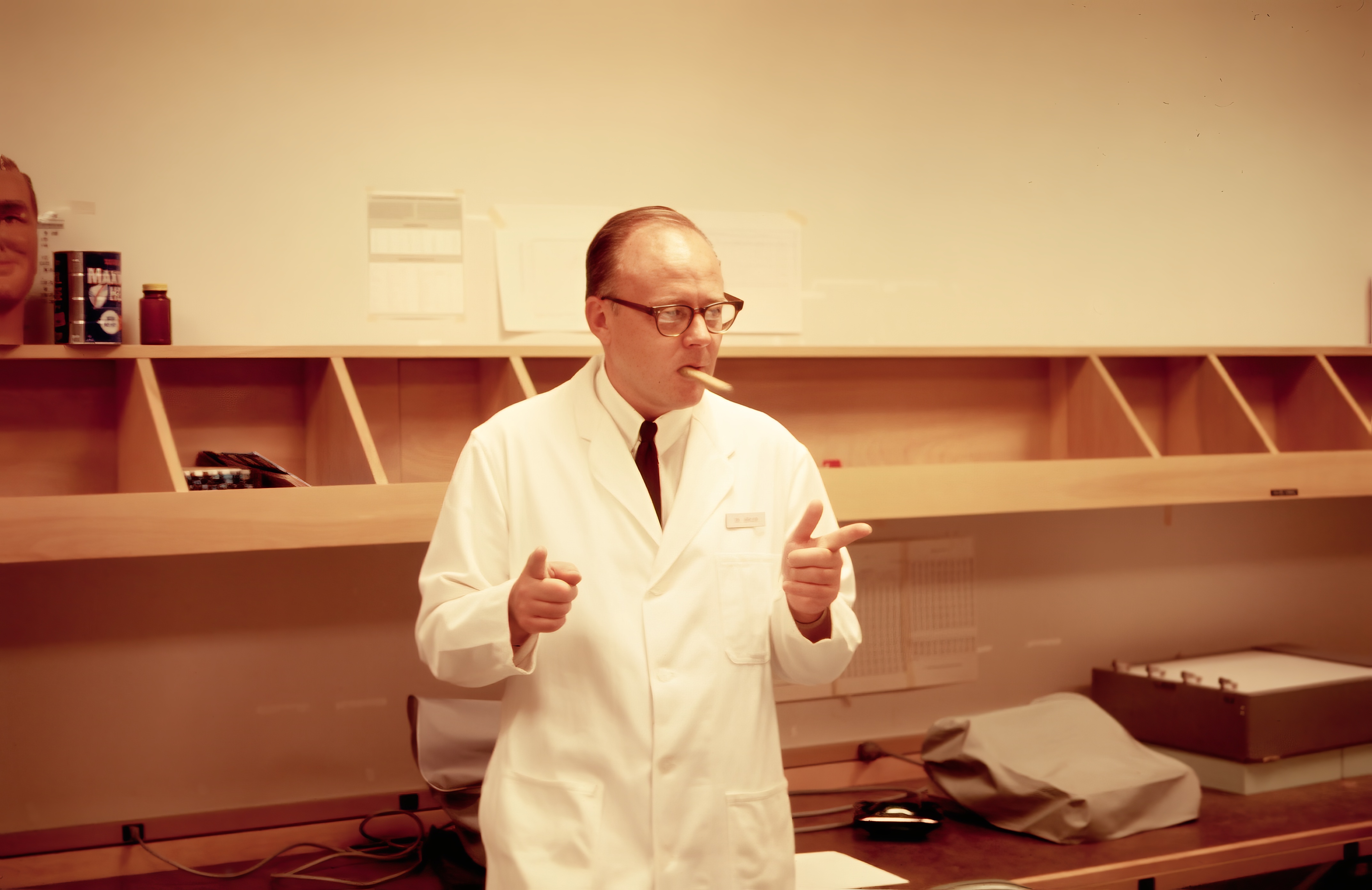
The research staff gathered almost every day for lunch in the conference room to share status, challenges, and problems over sandwiches. I don’t recall how I got food — maybe from the cafeteria in the Texas Institute for Rehabilitation and Research next door. Anyway, the discussion would devolve into the month-long Sheep’s Head tournament. Sheep’s Head is a card game that derives from Germany and is a hoot. What made it interesting was that we kept a monthly cumulative score. Jim was the ultimate Alpha and really wanted to win at everything. I think he biased the monthly totals by ending lunch hour early when he was up, or extending it a bit to catch up when he was down.
This was a very formative period in my life.
Leave a Memory or Comment
Have a story to add or something to say about this one? Don would love to hear it.