Lower Body Negative Pressure
These four words were foremost in my mind during my NASA years (1968-1974).
The human body is the result of a marvelous intricate design. I clearly believe The Designer is worthy of worship, but that is a different story. The multiple interacting control systems in the body are amazing. The LBNP experiments were associated with understanding how the body kept blood circulating properly at the appropriate pressure to keep the muscles and organs perfused.
One of the blood flow control systems is known as the body’s orthostatic stress response. When you go from lying prone to standing, your heart has to work harder to pump against the weight of blood in a roughly 5 foot column. The autonomic nervous system detects the changes and enacts an entire series of things to keep you from passing out. This series of reactions is called the orthostatic stress response.
One of the big questions Skylab was to answer is what does long term exposure to zero gravity do to the orthostatic stress response. A second question was how do we keep the response from degrading over time. A third question was does the degradation persist following return to normal gravity.
The Skylab missions were to be the first really long duration missions and a real opportunity to characterize the orthostatic stress response in zero G.
Lower Body Negative Pressure (LBNP) was a way to simulate the pull of gravity on the body. Essentially the lower half of the body is placed in a box with a seal at the waist and the pressure in the box is reduced. This causes pooling of blood in the legs sort of like what gravity does when we stand erect.
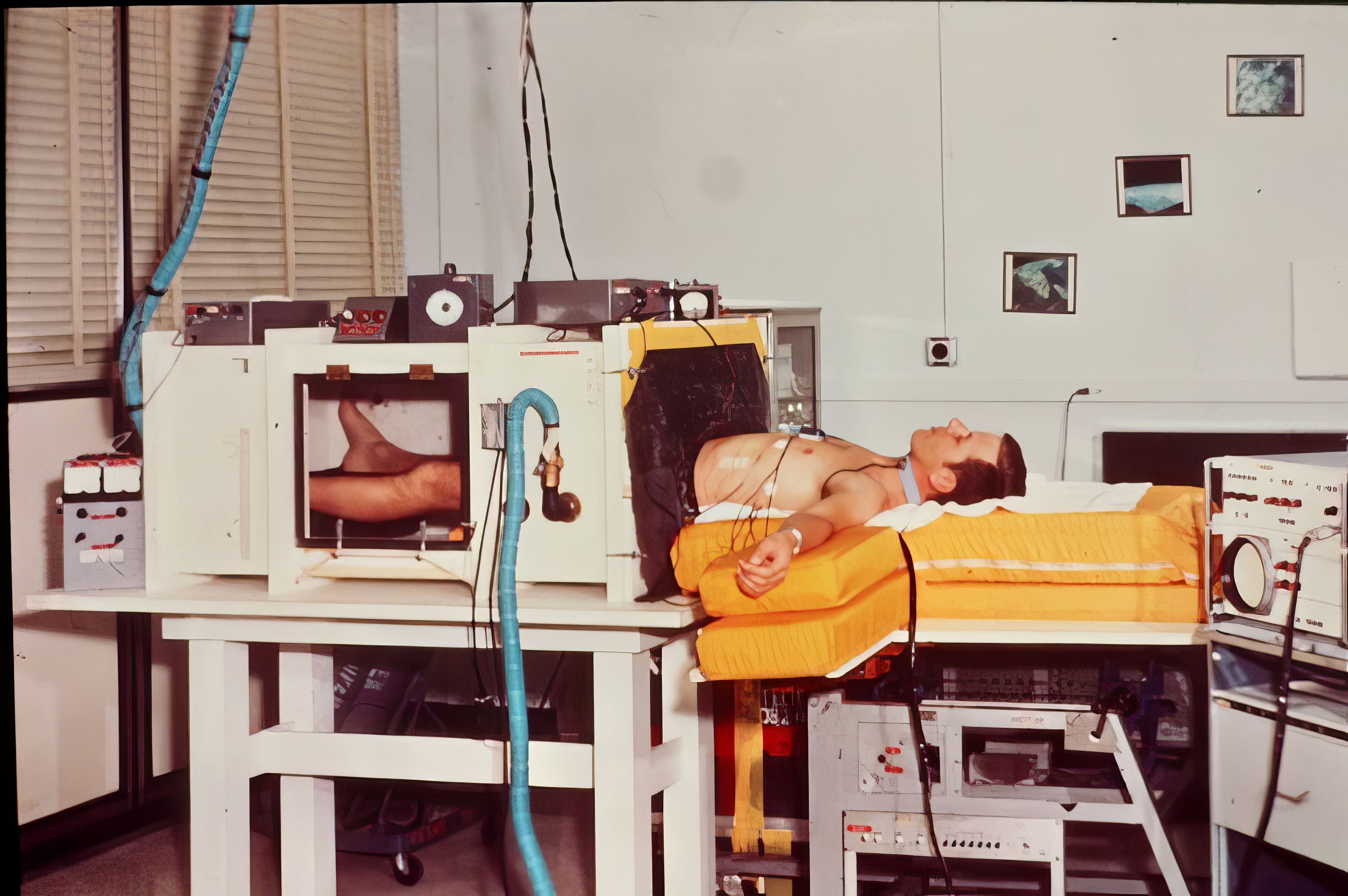
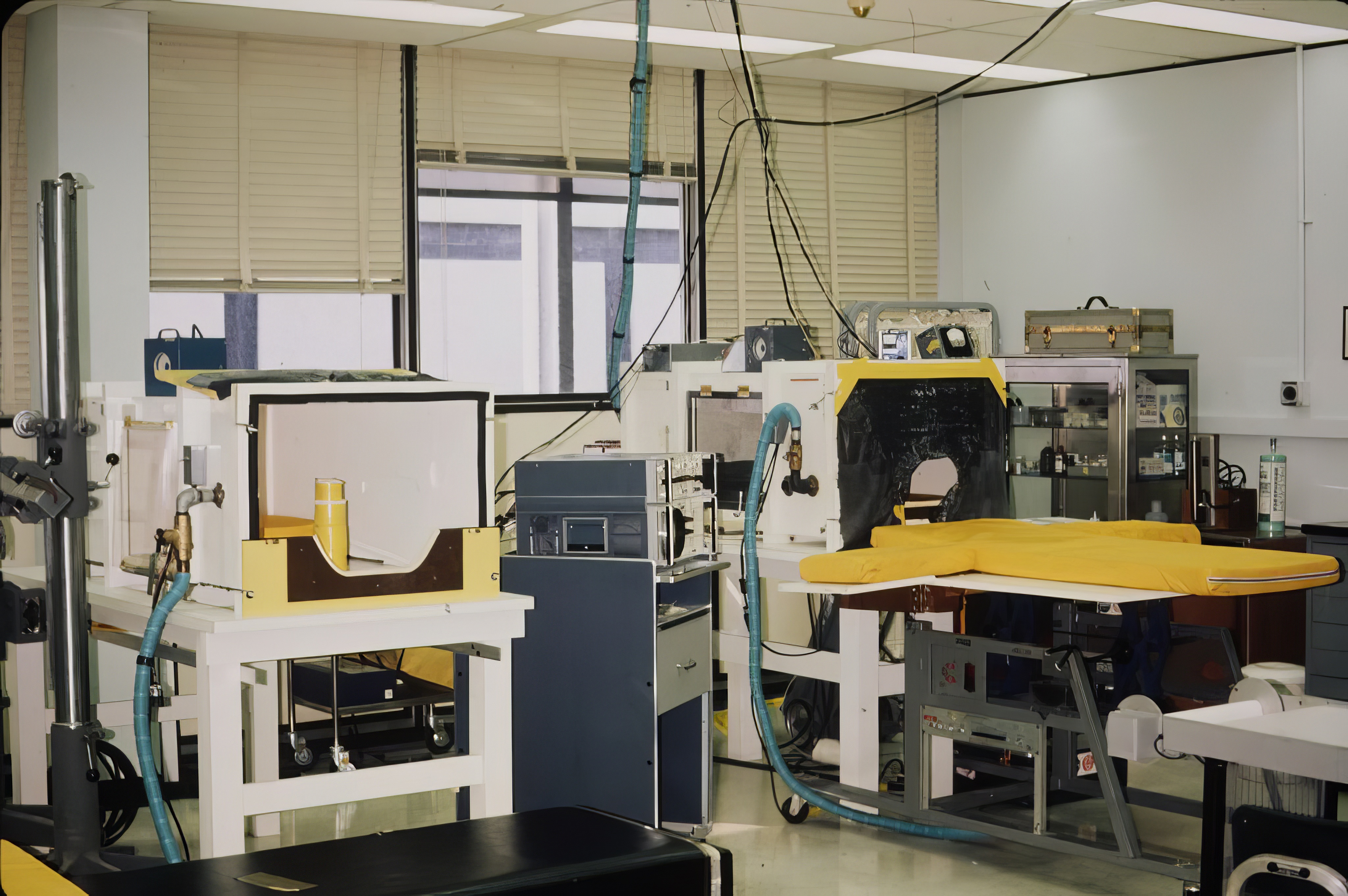
We had multiple devices as we prepared for Skylab by doing pre and postflight evaluations of all of the Apollo crews except for Apollo 13.
The instrumentation included a vectorcardiogram (a modification of the traditional 12-lead electrocardiogram that never took off in the clinical setting), a blood pressure cuff and a mechanism for measuring the change in volume of the calf. The window in the box was there to allow the installation of the leg volume plethysmograph.
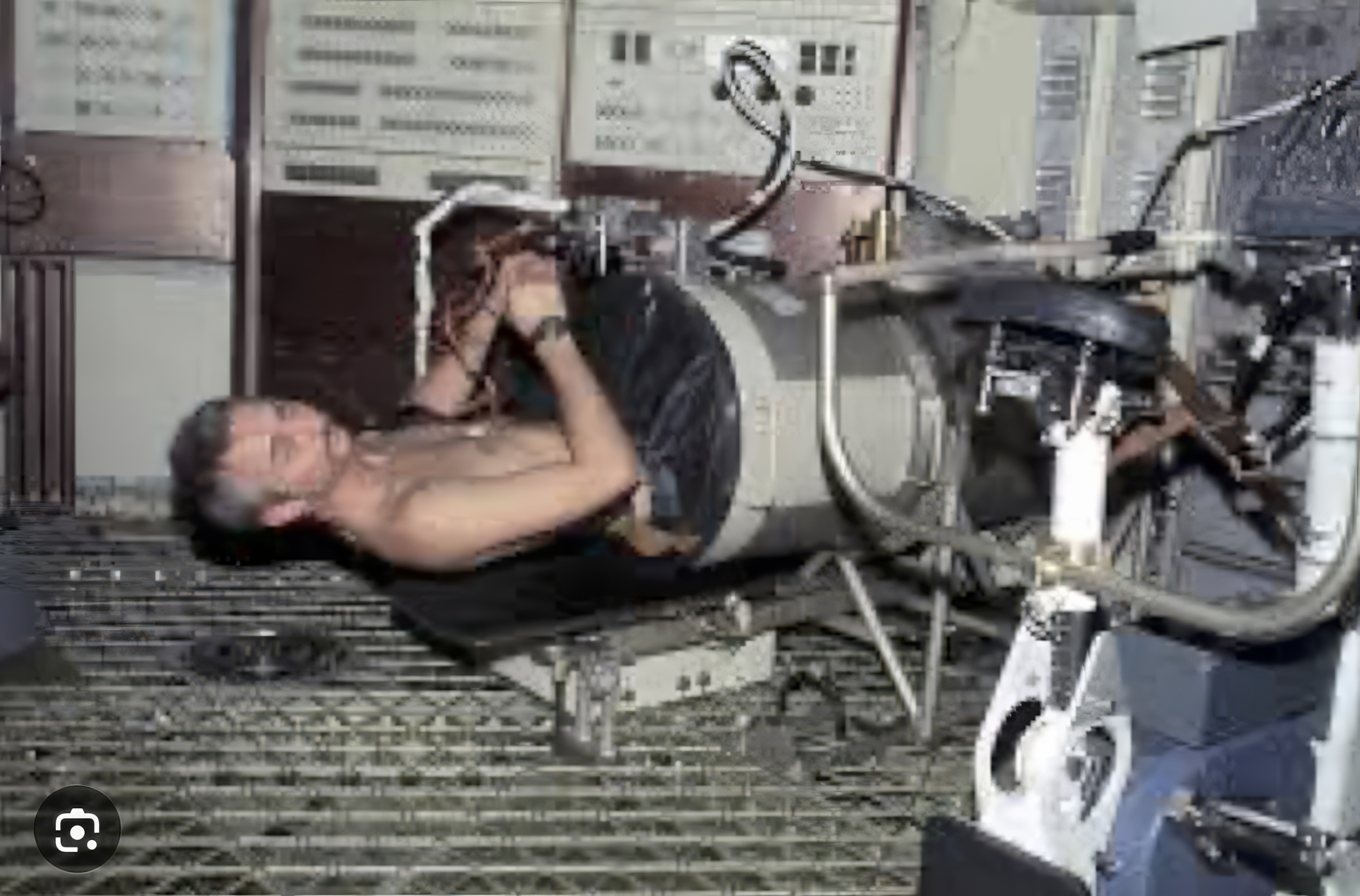
This is a photograph of astronaut Owen Garriott in the LBNP flight article during his Skylab mission.
It is pretty cool that the entire biomedical experimental setup for Skylab is available for viewing in the Skylab display at Space Center Houston.
My involvement in Skylab was pretty amazing as I look back on it.
I was employed by Technology Incorporated under contract to the Biomedical Branch of NASA to support Apollo and Skylab. My first assignment was to convert a computer program that analyzed vectorcardiograms (VECTAN) from an obsolete computer system to a ‘modern’ Univac 1108. This work started in the summer of 1968 between my 4th and 5th years at Rice.
When school started in the Fall, I had to cut back my hours at NASA, but there was so much work to do that NASA and Technology agreed to let me bring in a buddy and split the full time job into two half time jobs. Don Mauldin was my Rice classmate who was also interested in bioengineering. I got him an interview and he was hired.
We were a good team. We carpooled to the space center three days a week while protecting our class time at Rice.
I pretty much finished the VECTAN conversion and adaptation to the Skylab data system. Meanwhile Don and I designed the amplifiers for the vectorcardiogram system. We used the latest technology field effect transistors to achieve high input impedance in these amplifiers. We also designed the blood pressure measuring system that flew on Skylab. We actually patented the BPMS and the patent became the basis for the blood pressure consoles found in grocery stores and drug stores today.
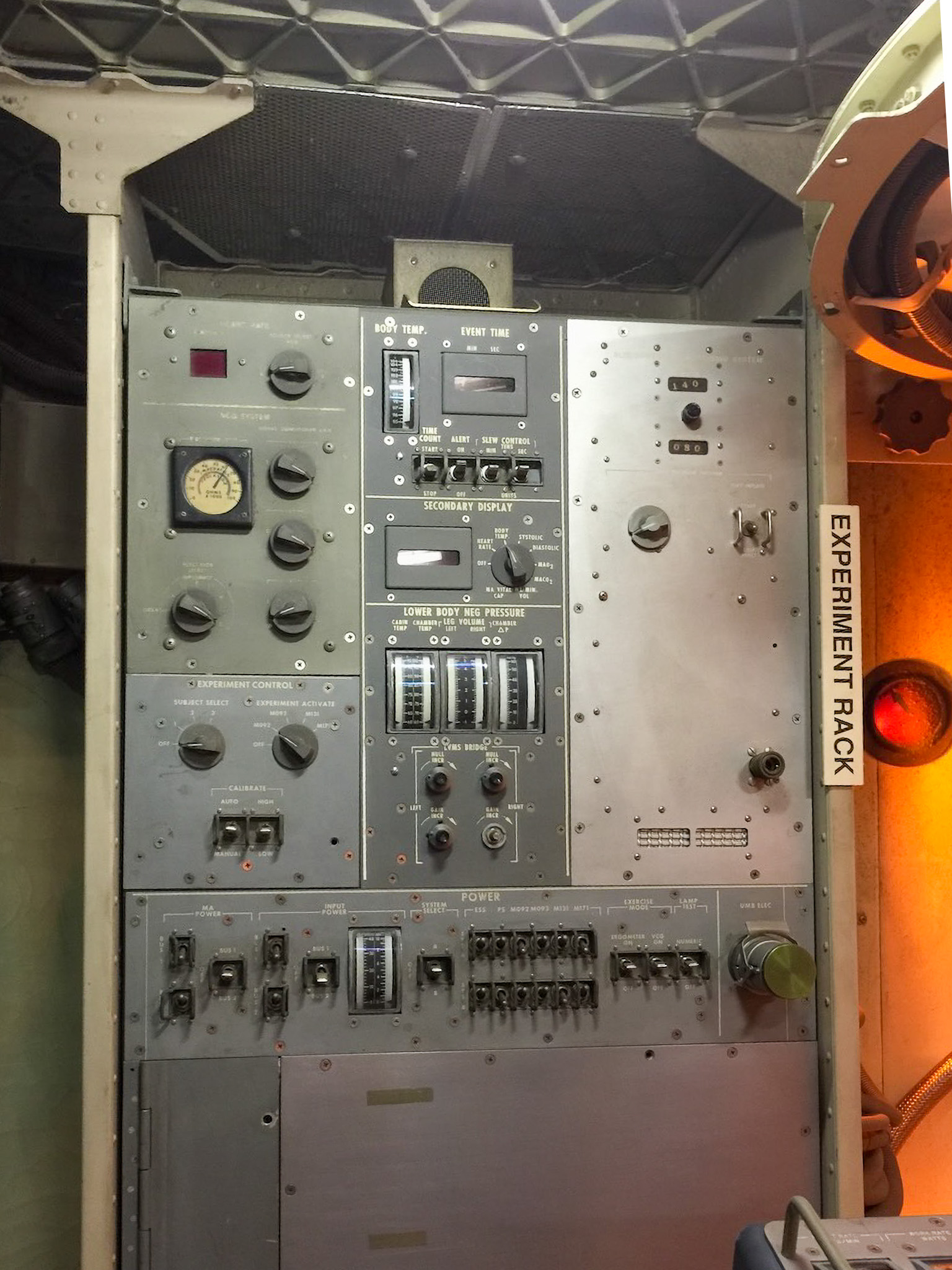
On the upper left is the VCG that Don and I designed. Pretty crude compared to today’s ECG devices that we encounter in our doctors’ offices. On the far right is the Blood Pressure Measuring System - also done by Don and Don. These devices actually flew aboard the real skylab and eventually burned up upon reentry.
Skylab reentered the Earth’s atmosphere on July 11, 1979. The 77-ton space station broke apart during its descent, scattering debris across the southeastern Indian Ocean and a sparsely populated section of Western Australia.
One measurement device that I did not get involved with was the device to infer leg volume changes. Initially we used mercury strain gauges. These were fine tubes of surgical rubber filled with mercury. Fitted around the calf, as the calf expanded the tube was stretched and the concomitant decrease in the radius of the tube increased the resistance of the mercury. This was a very small, but measurable decrease. From that we inferred the change in calf size and from that we inferred the volume of blood relocated into the lower extremities. Lots of inferences.
There was a critical design review relatively early in the development program, I guess mid 1969 or so. Somehow the fact that the strain gauges incorporated mercury had escaped the early planning. In this design review, the mercury caused a small explosion, figuratively that is. If the surgical tube were to break and release the mercury in the spacecraft, there would be a disaster. The mercury in 0-G would go anywhere and everywhere and, being conductive, the mercury would inevitably short circuit switches and components and completely disrupt the operation of the spacecraft electronics.
The upshot was that we were looking for a way to measure the change in volume of the lower body without using mercury strain gauges.
I came up with the concept of a pulsed volume plethysmograph. The concept was to attach a relatively large cylinder with a piston in it to the LBNP chamber and use an electric motor to drive the piston in and out of the cylinder. We could use high speed pressure transducers to measure the peak to peak pressure change that would be correlated to the free volume of the LBNP chamber. As the experiment proceeded and the pooled blood volume increased, the free volume would decrease and the peak to peak pressure changes would increase.
We actually got around to constructing a prototype as a proof of concept. There were two problems. The pulse cylinder had to be relatively large to effect a reasonable pressure change in the chamber and the motor to power the cylinder would need a bunch of power - probably more than the spacecraft could easily spare.
Side note: On launch one of the solar cell panels failed to deploy, cutting the power available to the craft. If we were worried about power early in the pulsed volume device, we were even more worried following this failure.

This shows the Skylab in orbit with the makeshift umbrella for cooling,
When the prototype was pulsing, it looked very Rube Goldberg and sounded like an out of balance washing machine. It was nicknamed the glopedyglop machine.
The ultimate device for leg volume measurement was an electrical capacitance device using the surface of the leg as one electrode and a thin band of copper suspended around the leg by a gossamer filling as the other electrode. It worked.
To assure repeatable VCG measurements, the astronauts received small tattoo dots at the electrode sites.
Amazingly, these experiments worked and we discovered that the body’s ability to deal with orthostatic stress was diminished by exposure to 0G. We also discovered that exercise such as riding a bicycle or walking on a 0-G treadmill mitigated the decrease. I am sure that is why we see such devices on the ISS.
That’s my tale and I am sticking to it.
Leave a Memory or Comment
Have a story to add or something to say about this one? Don would love to hear it.