Skylab Recovery
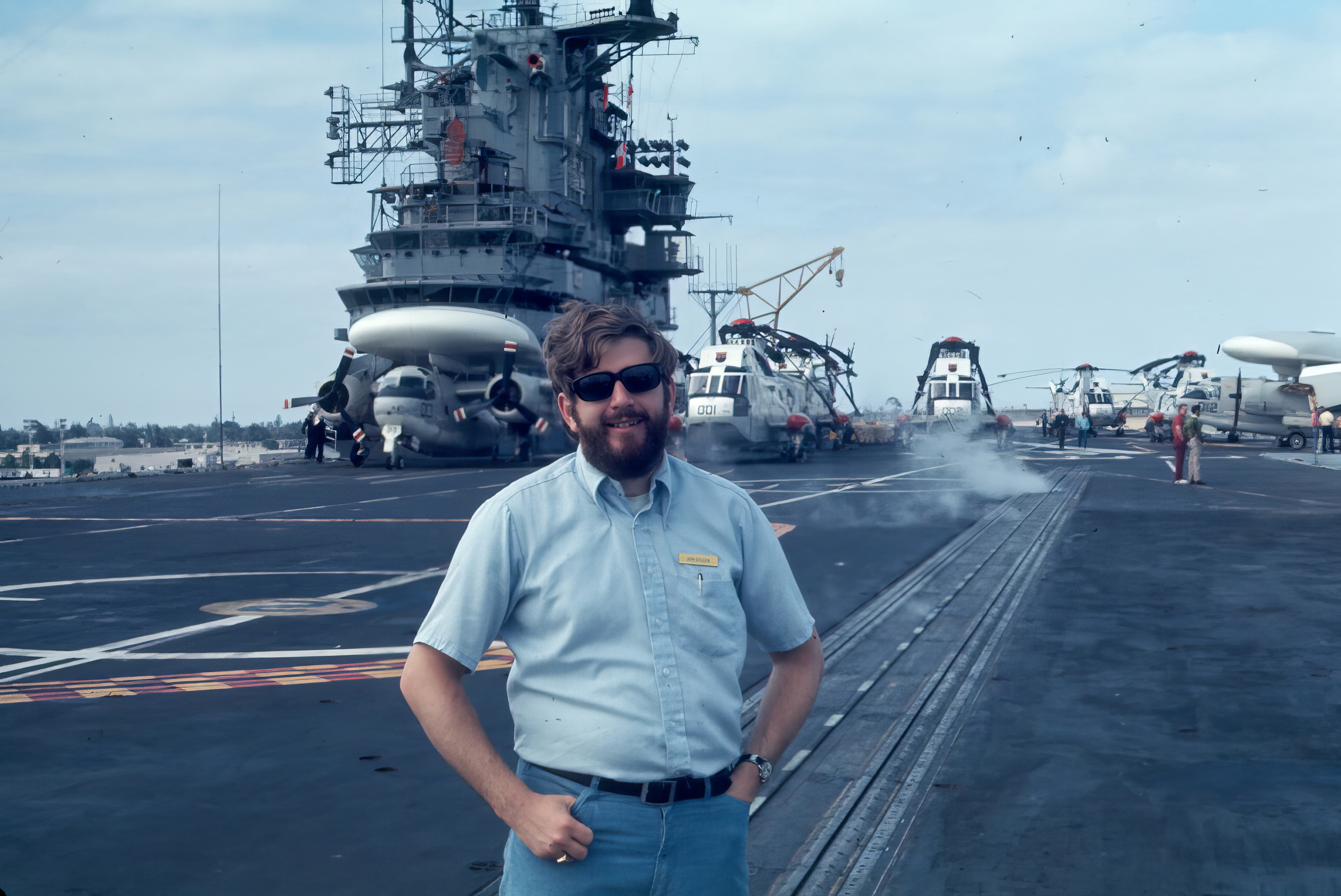
Chasing the Moon on PBS prompted me to review my time at the Johnson Space Center. I have to say that serendipity was a big factor in my series of jobs throughout my life. Serendipity is the secular word for divinely directed.
I worked part time in 68–69 (while attending Rice full time) for Technology Incorporated. We had a contract with the biomedical branch of NASA to support pre- and post-flight assessments of astronaut response to exposure to the space environment, particularly weightlessness. When I received my bachelor’s and master’s degrees (on the same day) from Rice, Technology Incorporated upgraded my status from part time to full time. So I was there all during the Apollo and Skylab missions.
This job was a tremendous blessing. First, it funded Kathy and me during my fifth year at Rice. Of perhaps greater significance were the technical aspects of the job. I got to finalize the development of a FORTRAN program called VECTAN to analyze the preflight, inflight, and postflight vectorcardiograms of the flight crew. My Rice buddy Don Mauldin and I developed the vectorcardiogram electronics that flew on Skylab. Don and I were the electronics part of the team that developed the blood pressure measuring system for Skylab. Don and I also developed the Contourograph to display VCG signals in Mission Control. What a hoot!
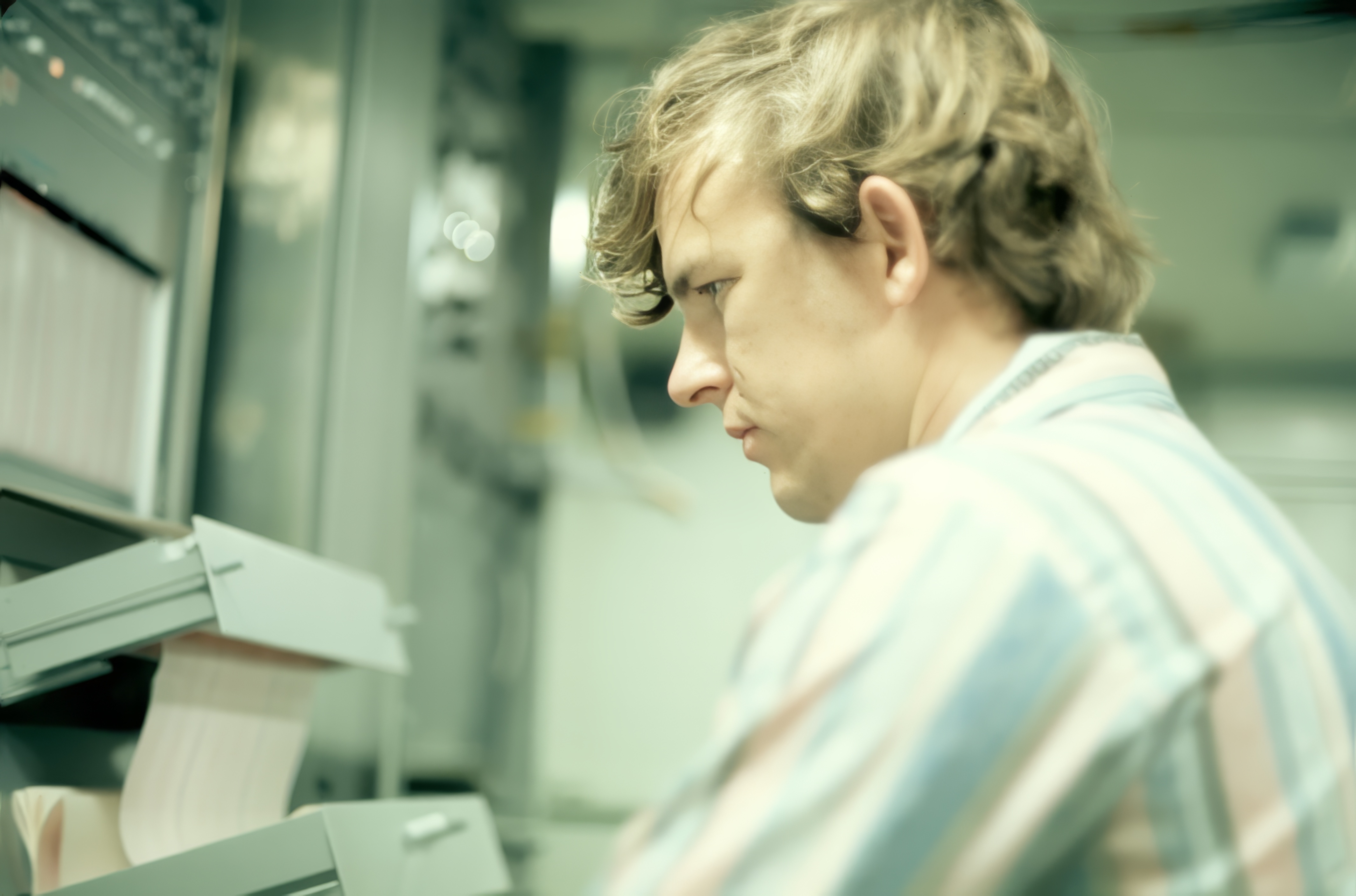
I had no idea what a good job this was — I just went to work and did the next thing, day in and day out.
That I got to know all of the Apollo and Skylab astronauts was a fantastic benefit.
A major focus of Skylab was to understand the effects of long-term exposure to the orbital environment on the astronaut’s health. Since we were going to assess many aspects of their physiology and health before, during, and after each mission, we did not want to compromise their health through contact with testing personnel. The biomedical branch of NASA put a health maintenance protocol into effect for everyone who would be in close contact with the ‘nauts pre- and post-flight. I forget the name of the program, but I was designated a ‘primary contact,’ with the health screening and badge to prove it.
Folks of my generation recall news coverage of Mercury splashdowns and recoveries. The vehicle would reenter the Earth’s atmosphere with tremendous energy being deflected by the ablative heat shield, deploy parachutes, and splash down in the ocean, preferably near the US Navy recovery vessel.
All of the US manned vehicles were recovered by the splashdown method, and this was planned for the Skylab crews as well.
Skylab contingency planning accounted for the possibility of a need to return to Earth earlier than the actual mission endpoint. The trick to all of this was the fact that departure from any arbitrary orbit had an optimal splashdown point that moved around the world from day to day.
In light of this possibility, NASA worked with the US Navy to position potential recovery vessels in the vicinity of those splashdown points so that the astronauts could be safely gathered aboard ship in the event of an early mission abort.
Further excellent planning included provisions to still get some postflight medical testing accomplished even if the data might be corrupted by not getting the guys into the lab as soon as possible. The postflight biomedical labs were constructed in a series of 12 blue, semi-portable containers called MUSTs (Mobile Utility Surgical Tent?). They were portable so that they could be flown from Ellington Air Force Base in a Lockheed C-5A to any of the contingency landing areas worldwide.
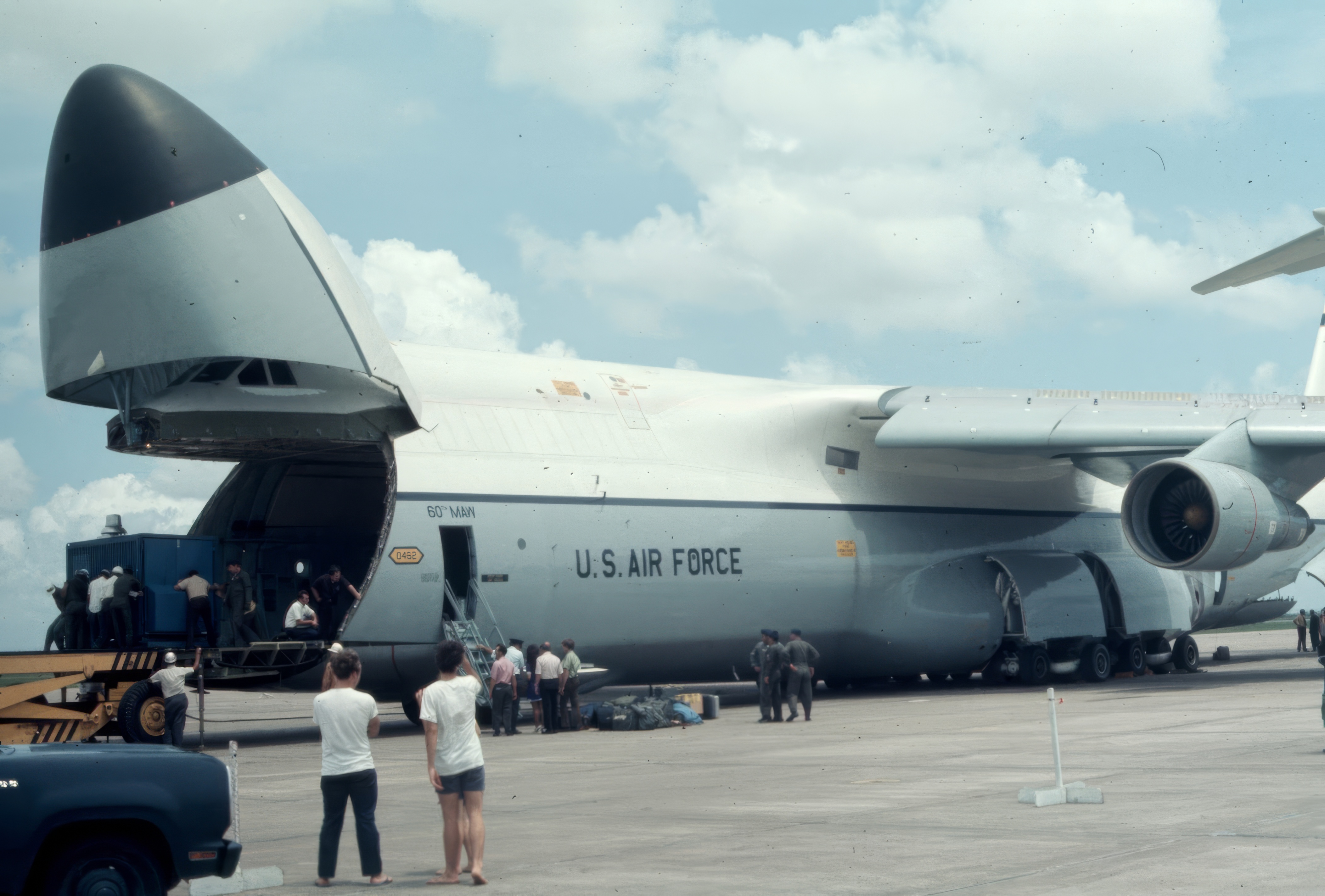
Because I had some lab electronics in the portable Cardiovascular Laboratory where we would do the Skylab postflight testing, I was selected to be part of the recovery team. We were on a four-hour alert status throughout the mission. We were to have a ‘go bag’ ready and to report to Ellington to fly with the labs to the contingency location. This was all pretty exciting and cool.
As the mission progressed, the odds of an early abort diminished to the point that we could do a more orderly departure to join the primary recovery ship in San Diego and steam to the recovery site.
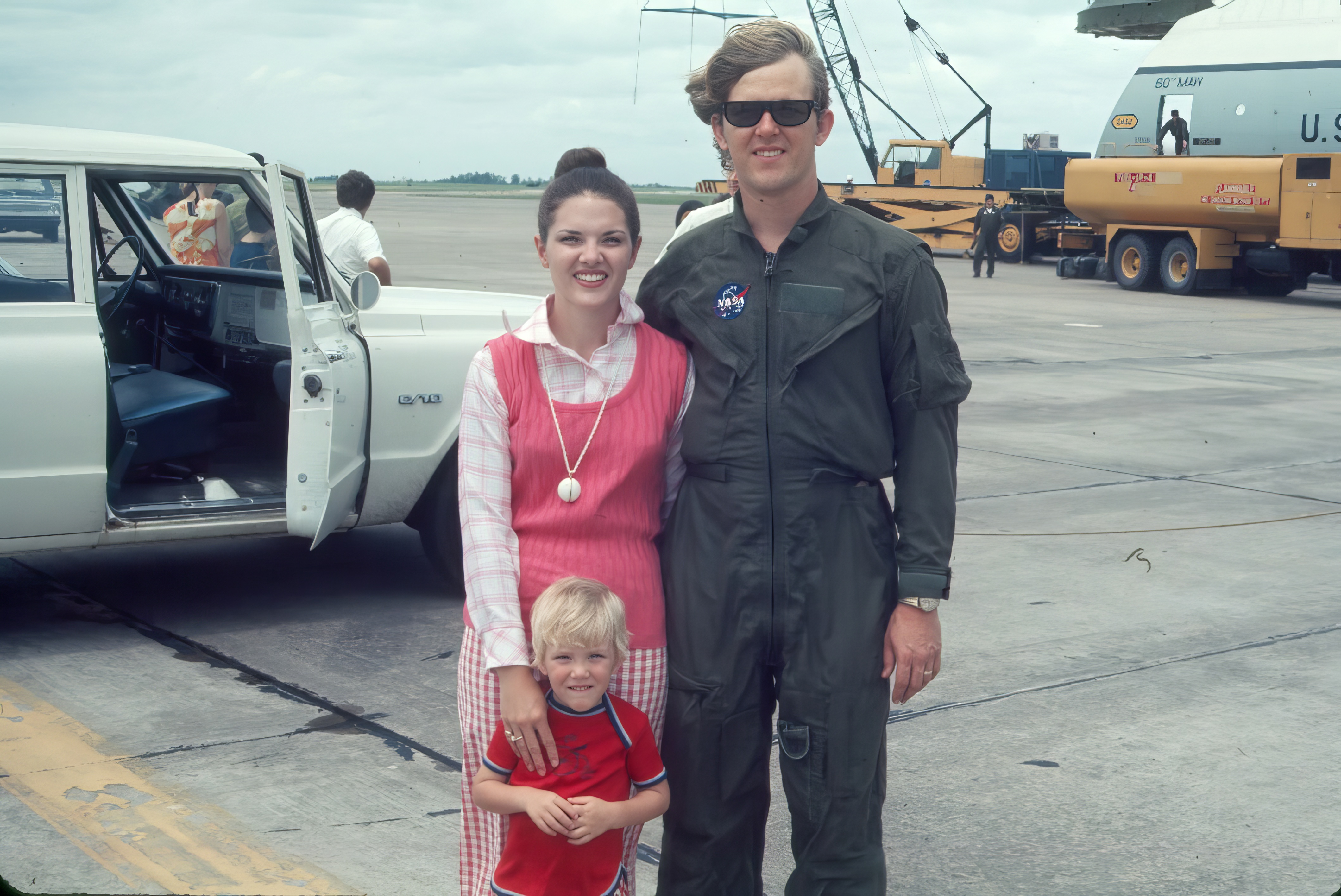
This recovery voyage was a further blessing and adventure all its own. We flew in the passenger compartment of the C-5A from Ellington to Coronado Island in San Diego, where the labs were loaded onto the aft portion of the hangar deck of the USS Ticonderoga — a World War II, Essex-class aircraft carrier. Interesting fact: this was the last commissioned voyage of the Tico.
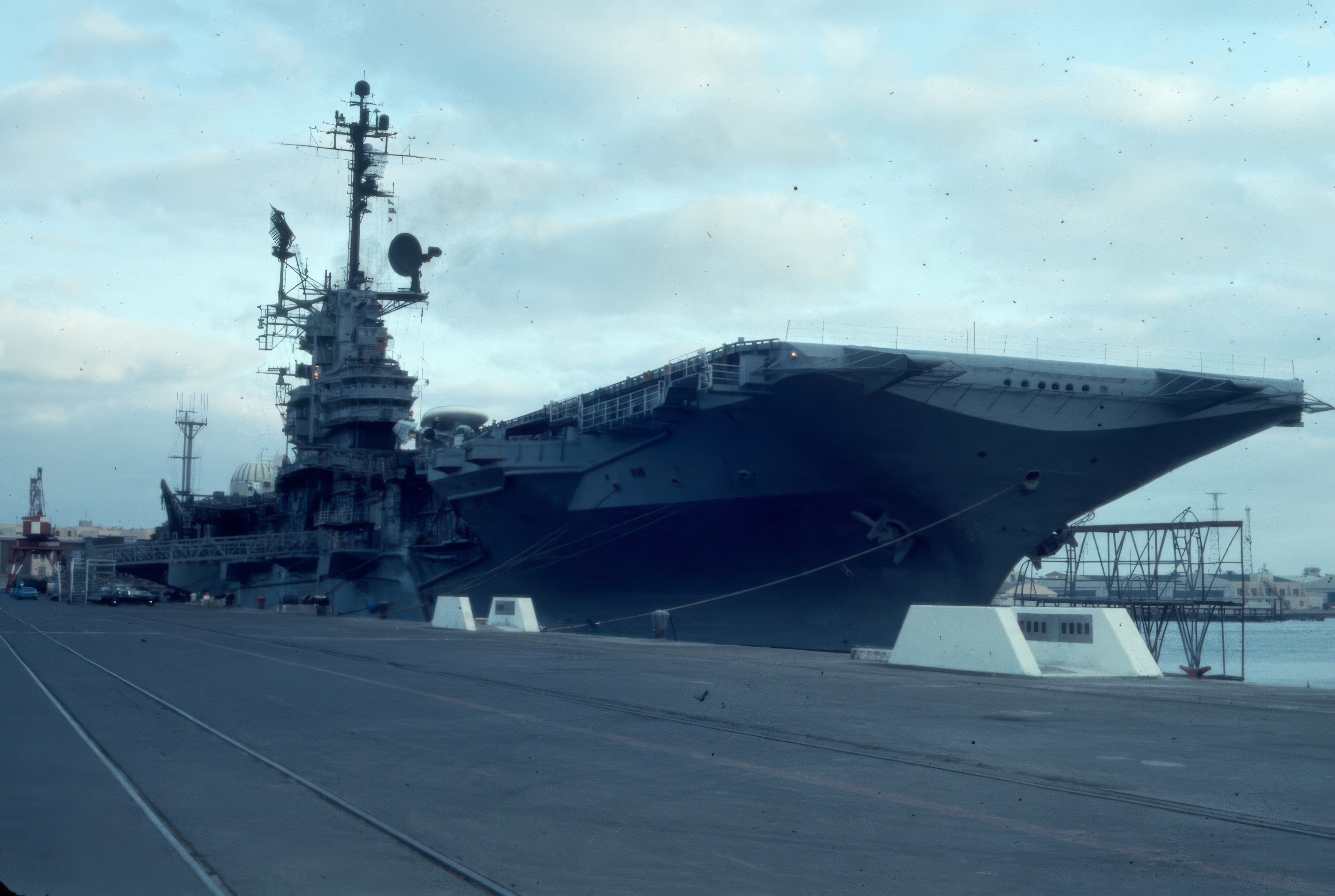
Despite having lived with a ‘go bag’ for a couple of weeks, I was ill-prepared for this adventure. Luckily I had won some money in a poker game with some of my colleagues and some of the C-5A loadmasters. We had liberty to go ashore in San Diego and I used my cash to buy a pair of jeans. I wish I had bought a sweatshirt.
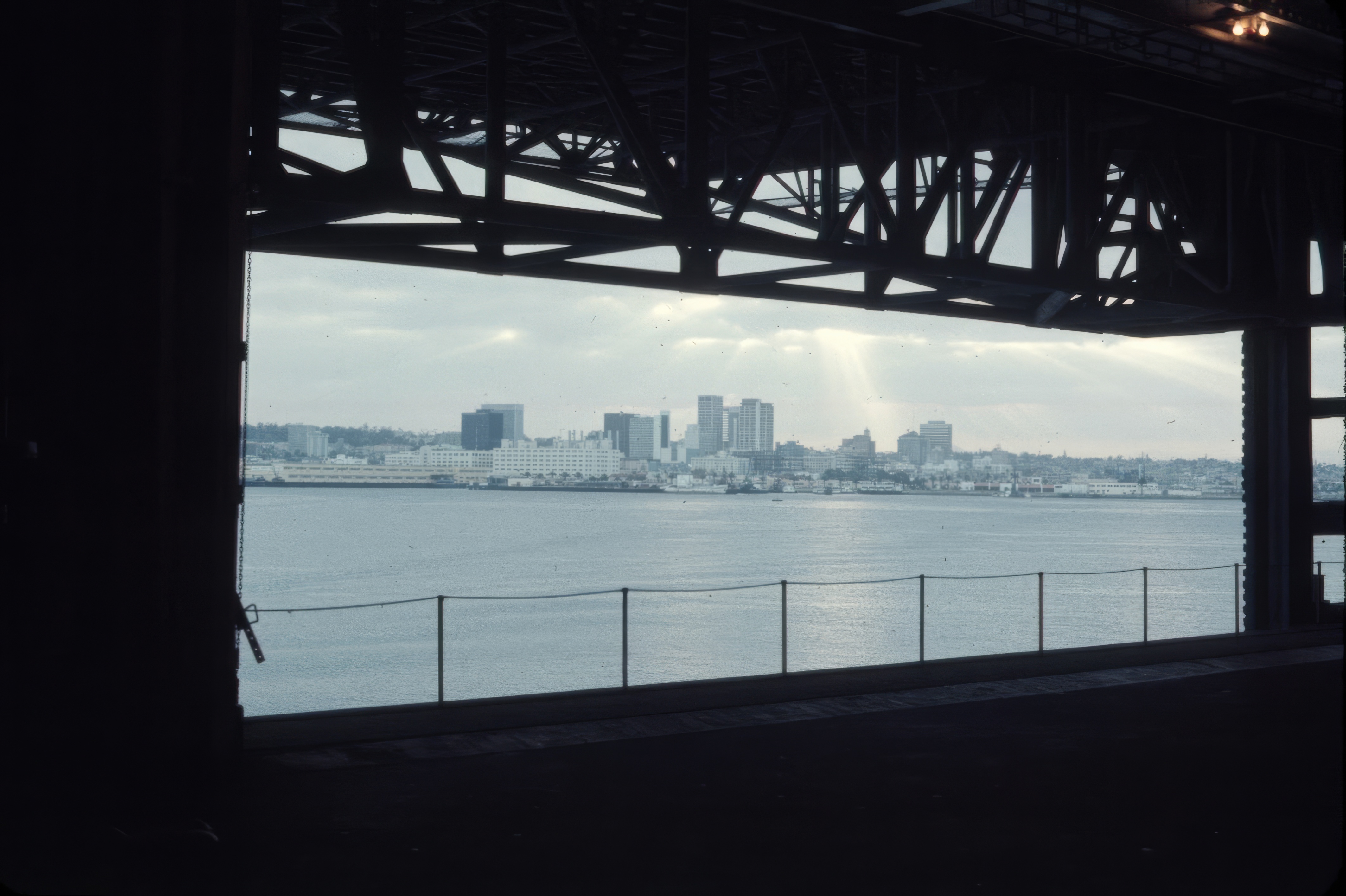
Sailing on the Tico was a brand-new experience. We were known as ship riders, and our muster station in case of an emergency was the wardroom. We pretty much had the run of the ship and I definitely took advantage of that. I saw pretty much the whole ship from top to bottom. I learned a new acronym — FUSDAP — for use in emergencies: Forward and Up Starboard, Down and Aft Port. This kept foot traffic from going in opposing directions. I just had to always remember that port and left each have the same number of letters. As a really old ship on its last voyage, the Tico provided several opportunities to use the acronym as various leaks and faults were announced over the ship’s PA system.
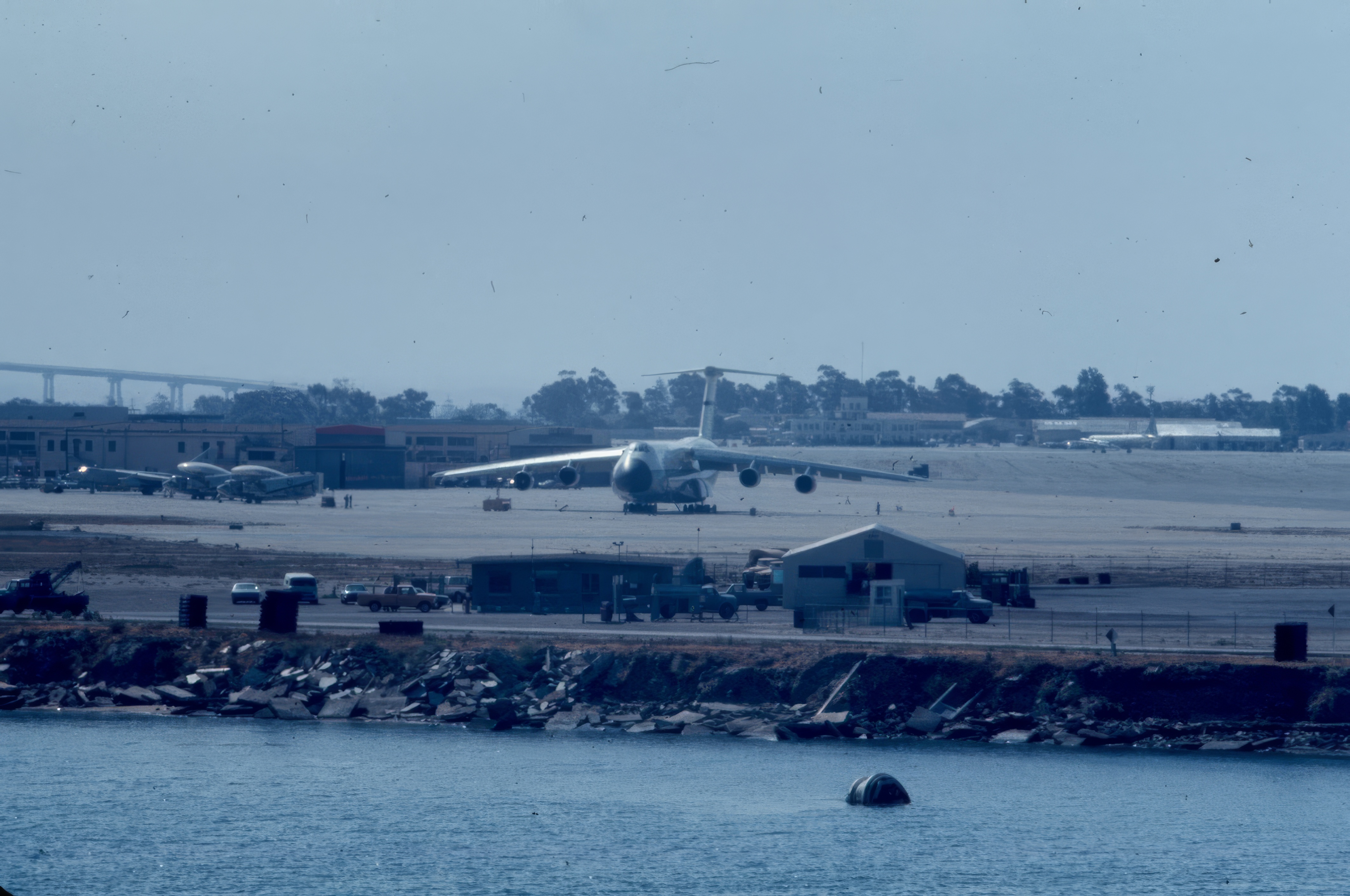
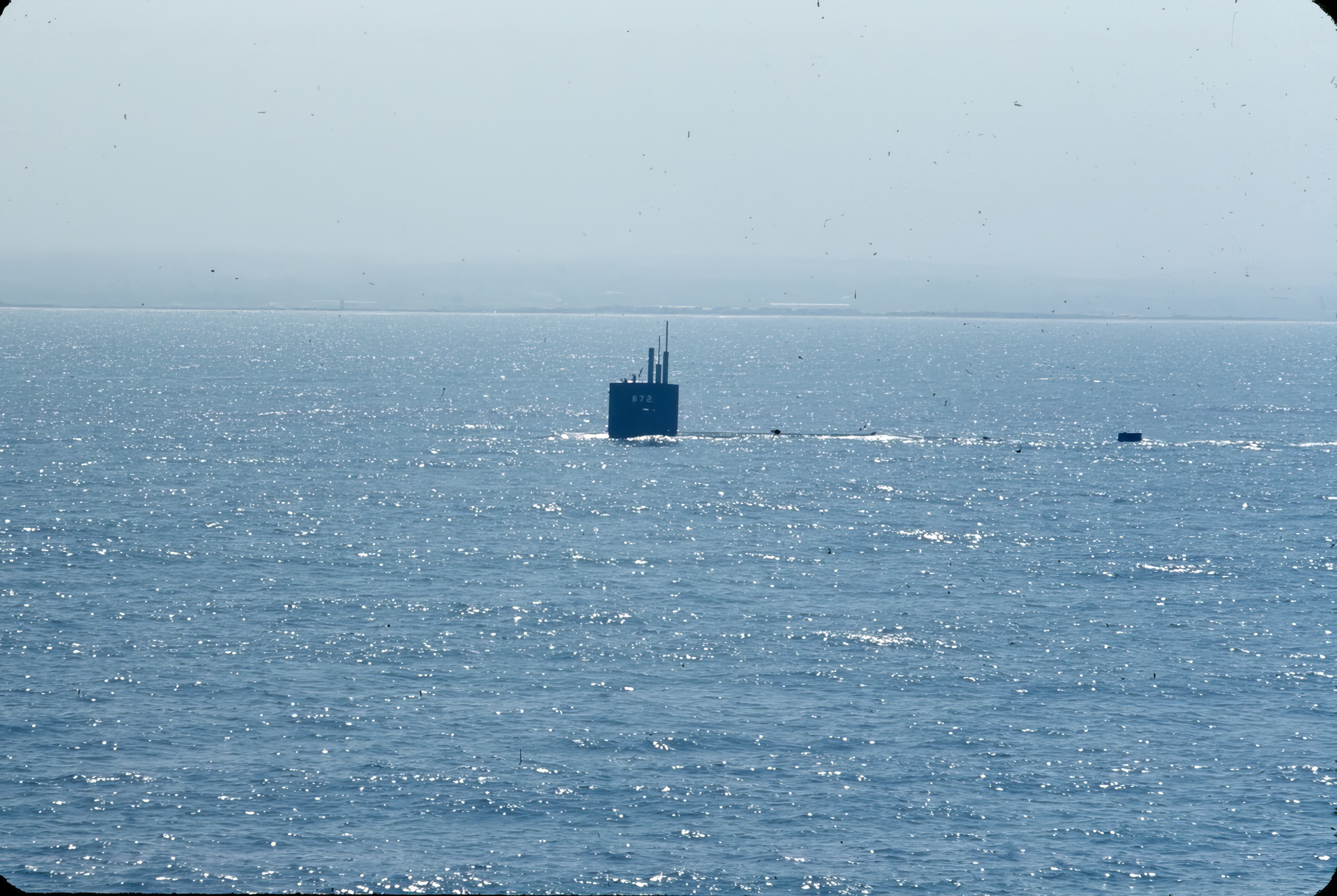
The first day out of San Diego, about 10 AM, came the announcement of flight operations to recover a COD (Carrier Onboard Delivery aircraft). I grabbed my trusty Pentax Spotmatic and made for the flight deck on the starboard side, just aft of the temporary structure containing the CBS satellite dish. I got great photos of the COD’s landing and being stopped by an arresting cable.
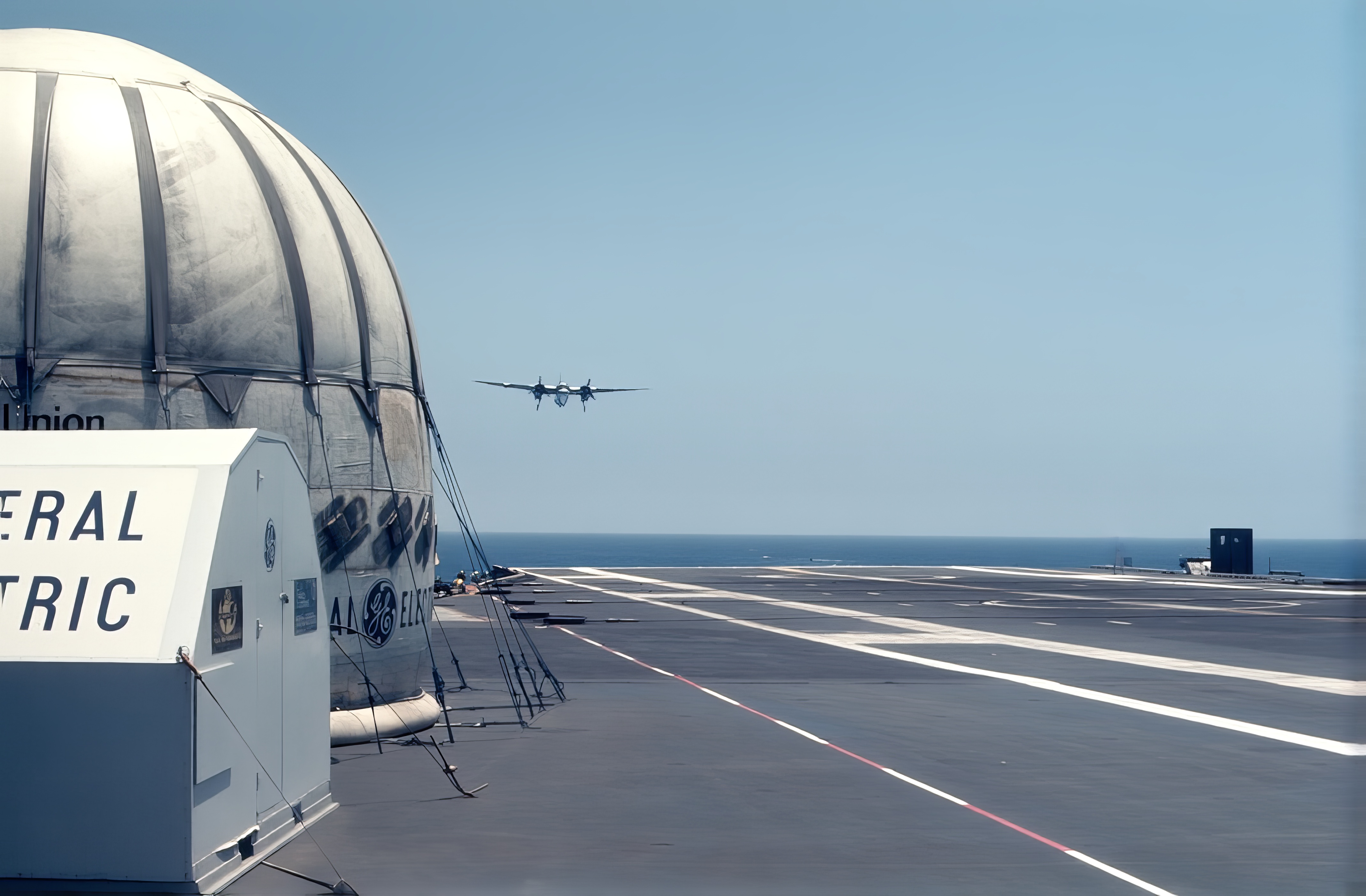
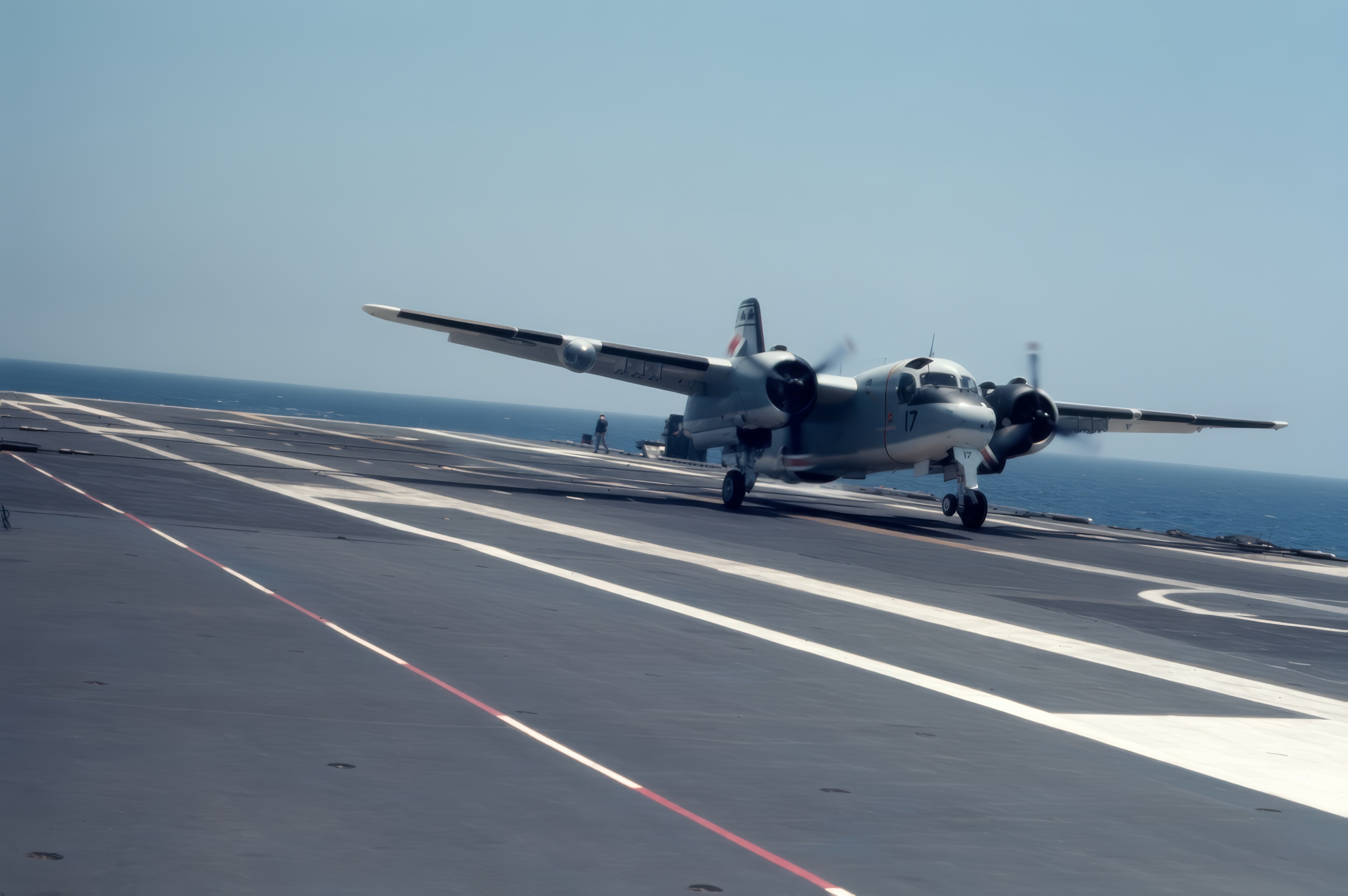
During lunch we were given a lecture and stern warning to remain clear of the flight deck during flight operations.
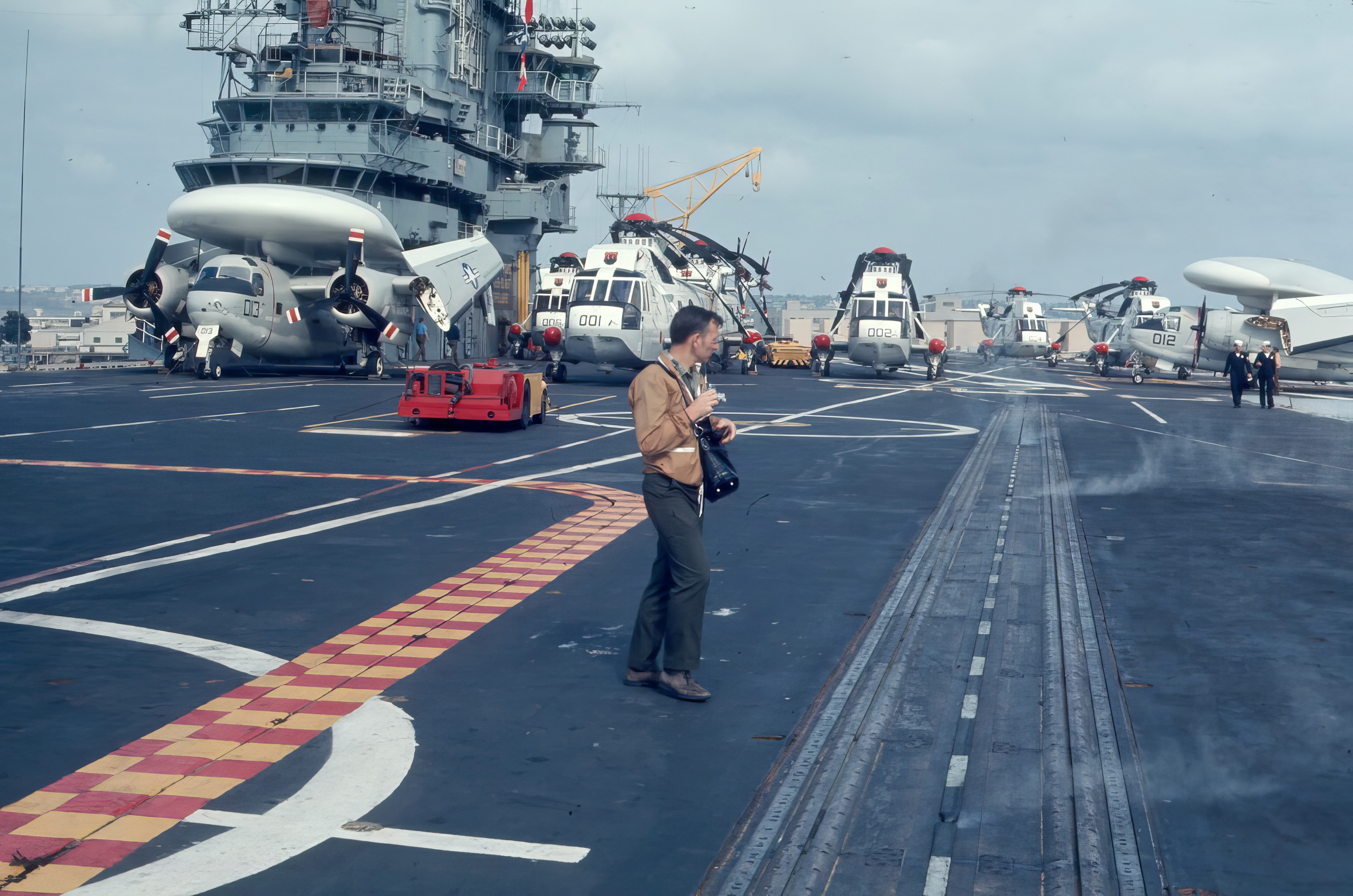
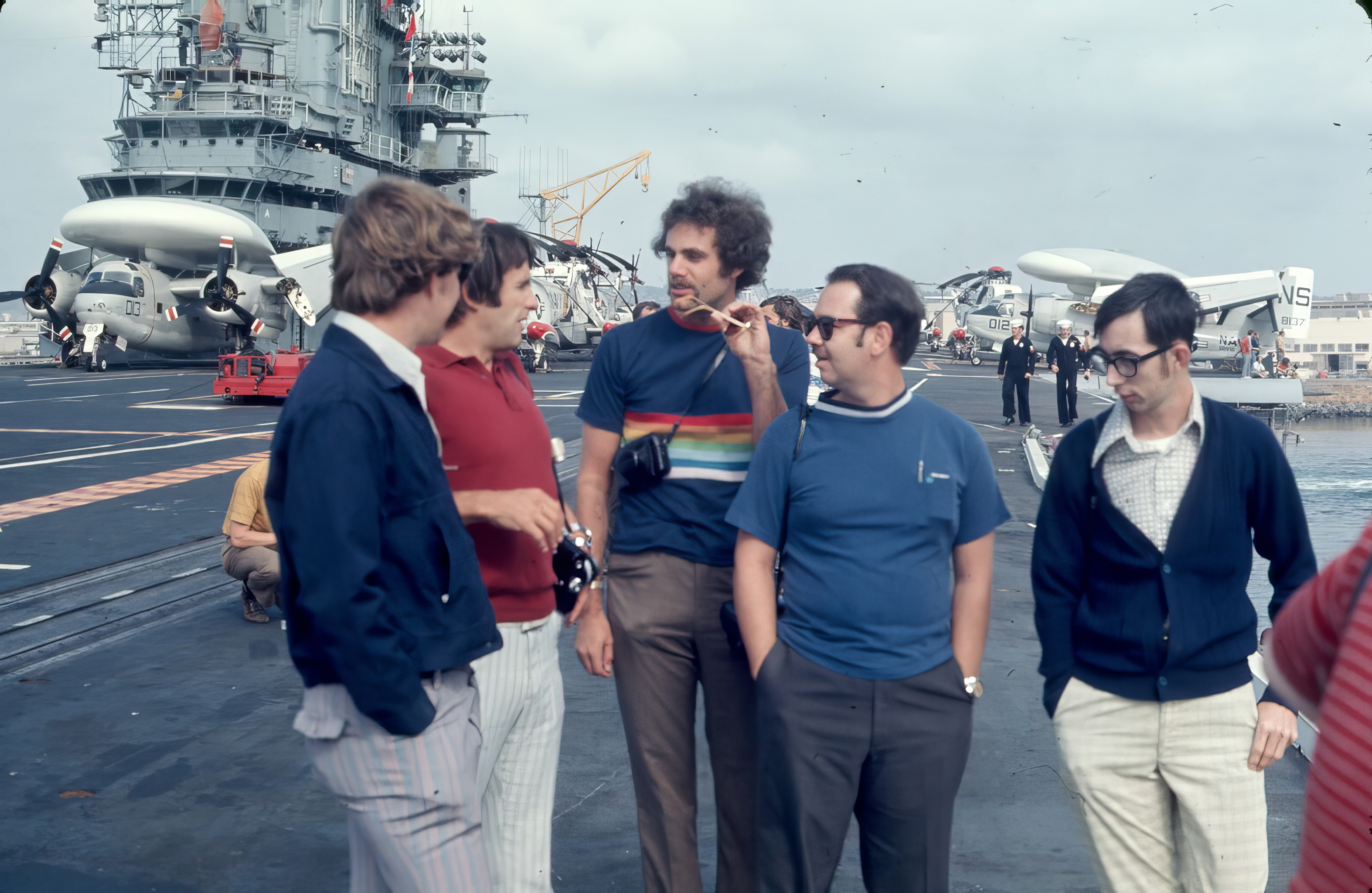
The first night out of San Diego we were still in what is known as the continental swell. These are long-period waves produced by the Humboldt Current along the North American coast. The effect was a significant roll of even an aircraft carrier. My rack (Navy for bunk) was the top rack in a stateroom I shared with Joe Baker. The roll was so pronounced that I was fearful of being rolled out onto the deck.
Our stateroom was on the 02 level. This was two decks up from the hangar deck — the reference point for deck numbering. Going up, the numbers were prefixed by a ‘0,’ whereas decks below the hangar deck had plain numbers. Typically this stateroom would be occupied by a pair of naval aviators.
The flight deck was 03, so as I lay in my rack and touched the overhead (ceiling), I was touching the bottom of the flight deck.
The carrier’s recovery team practiced recoveries every morning by dropping a dummy Apollo capsule overboard and then launching the recovery helicopters to take the swimmers to the capsule, secure it, attach the lifting harness, and bring it back to the Tico.
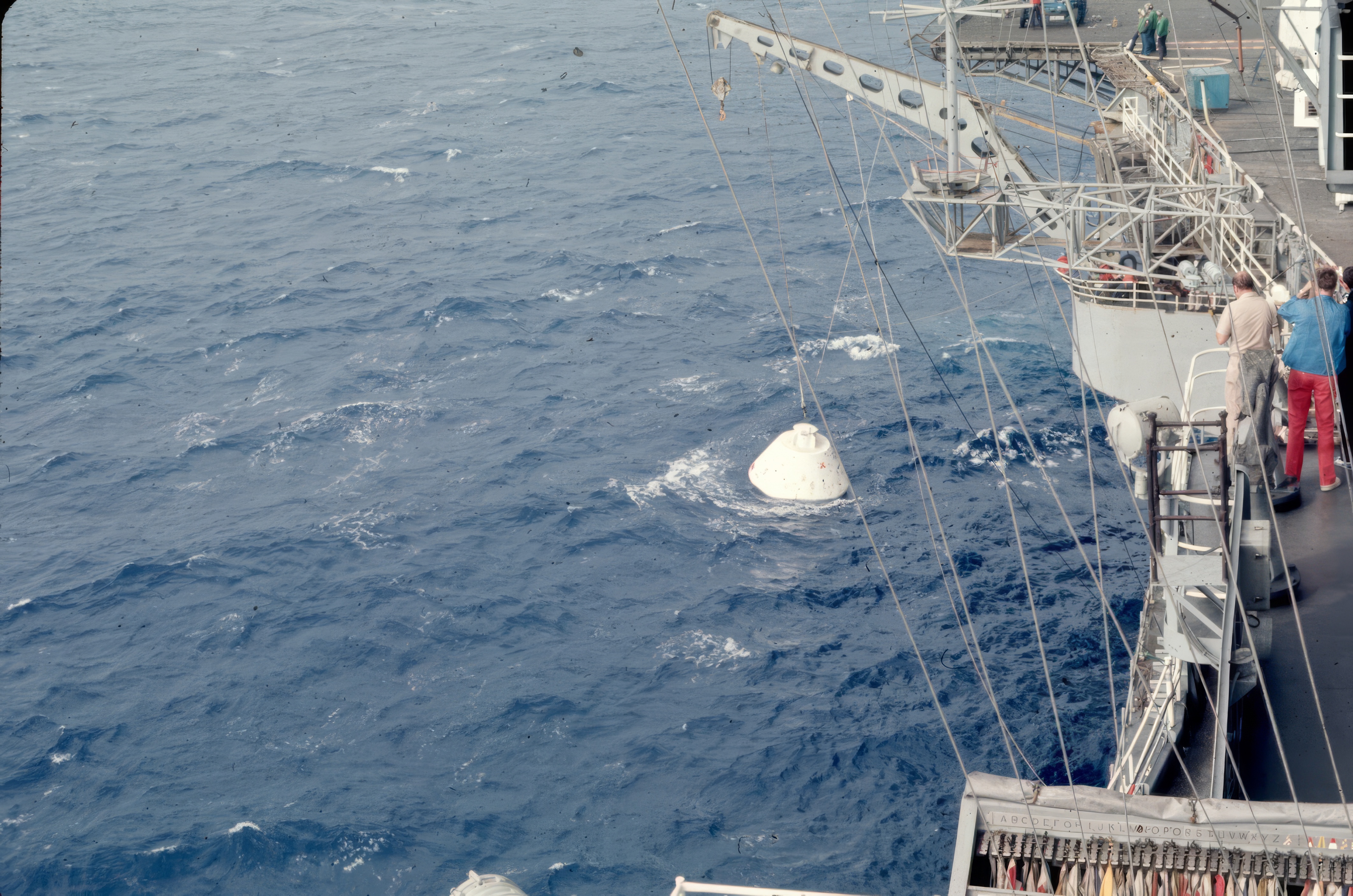
The bad news about this was that the time of the projected recovery was around 7 AM. This meant that the helicopters started around 5 AM, began turning blades around 5:30, and lifted off around 5:45. That I could touch my overhead and be touching the flight deck meant that almost directly above me was a helicopter pad. That 5 AM engine start was my unwanted alarm clock.
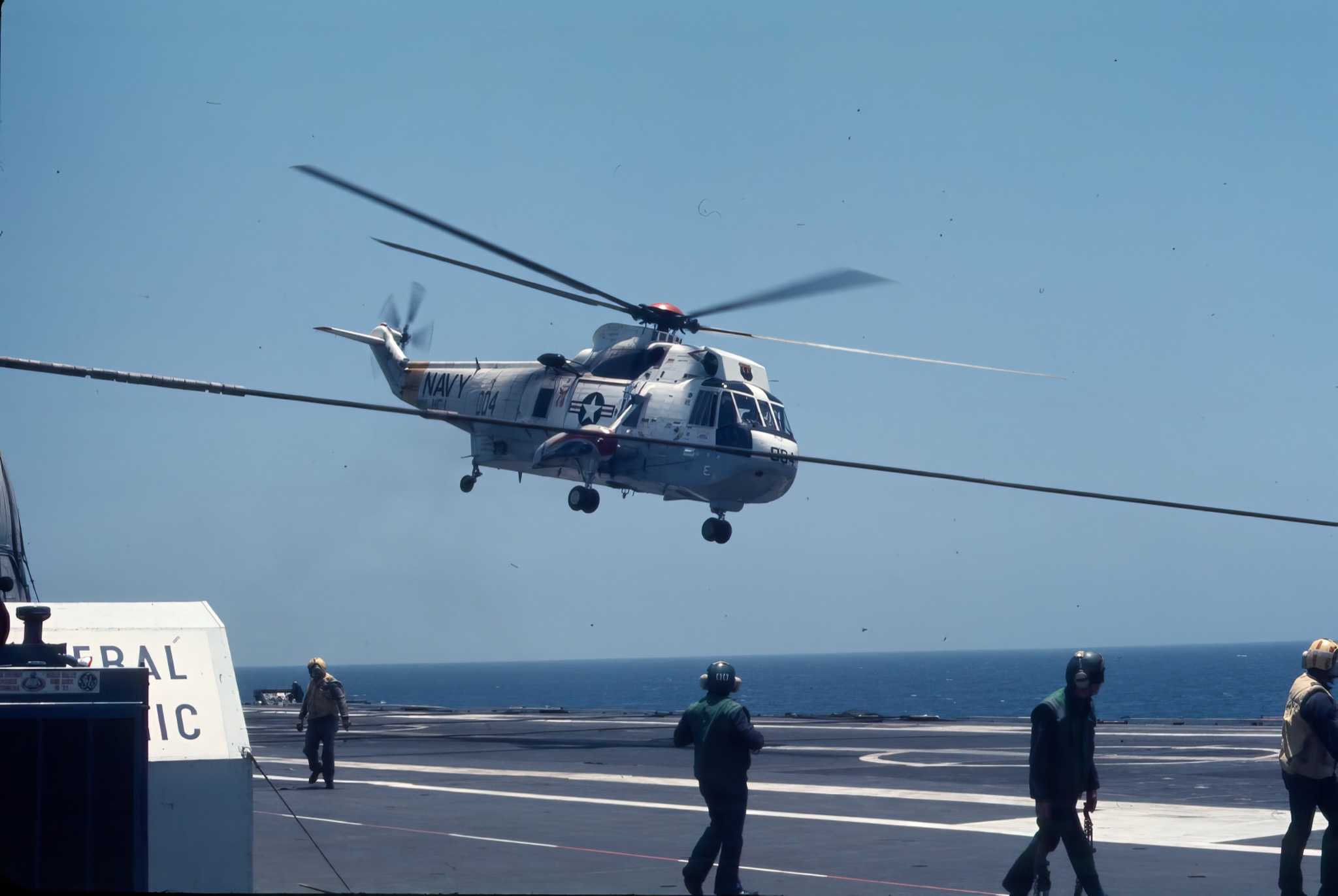
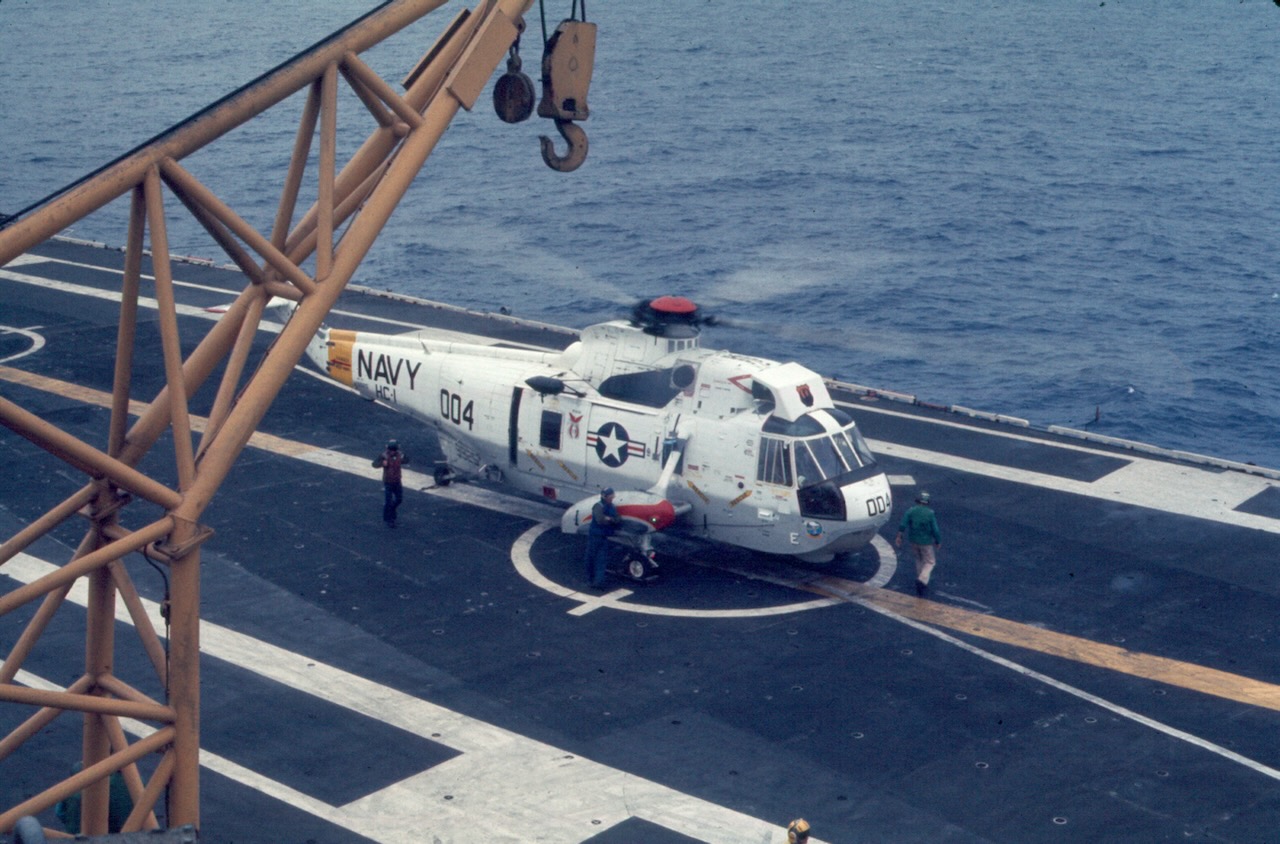
I had never seen water so beautifully blue. I loved to go into the netting beside the hangar deck and watch the water…but, dang, it was cold. I needed a sweatshirt.
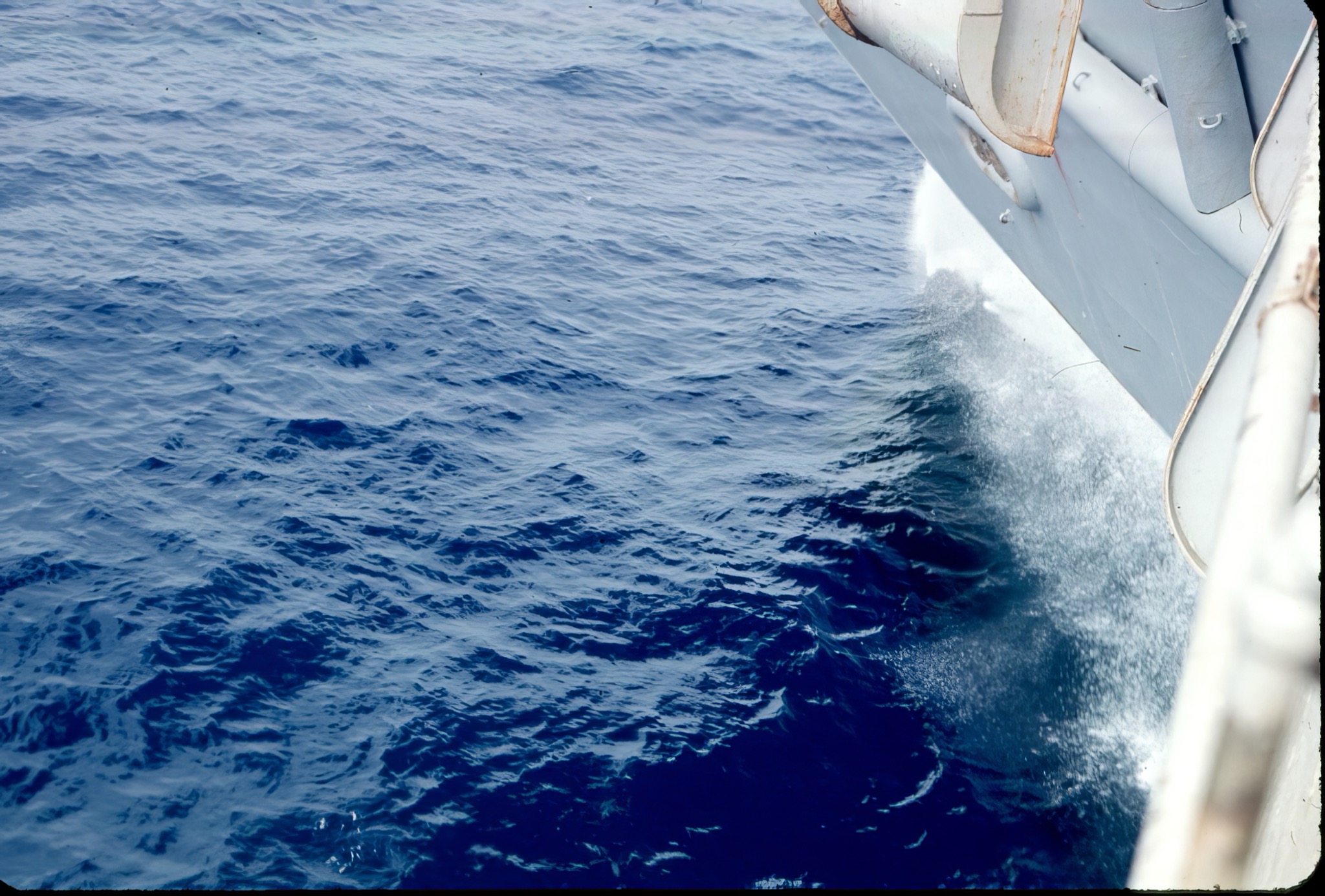
The chow was excellent!
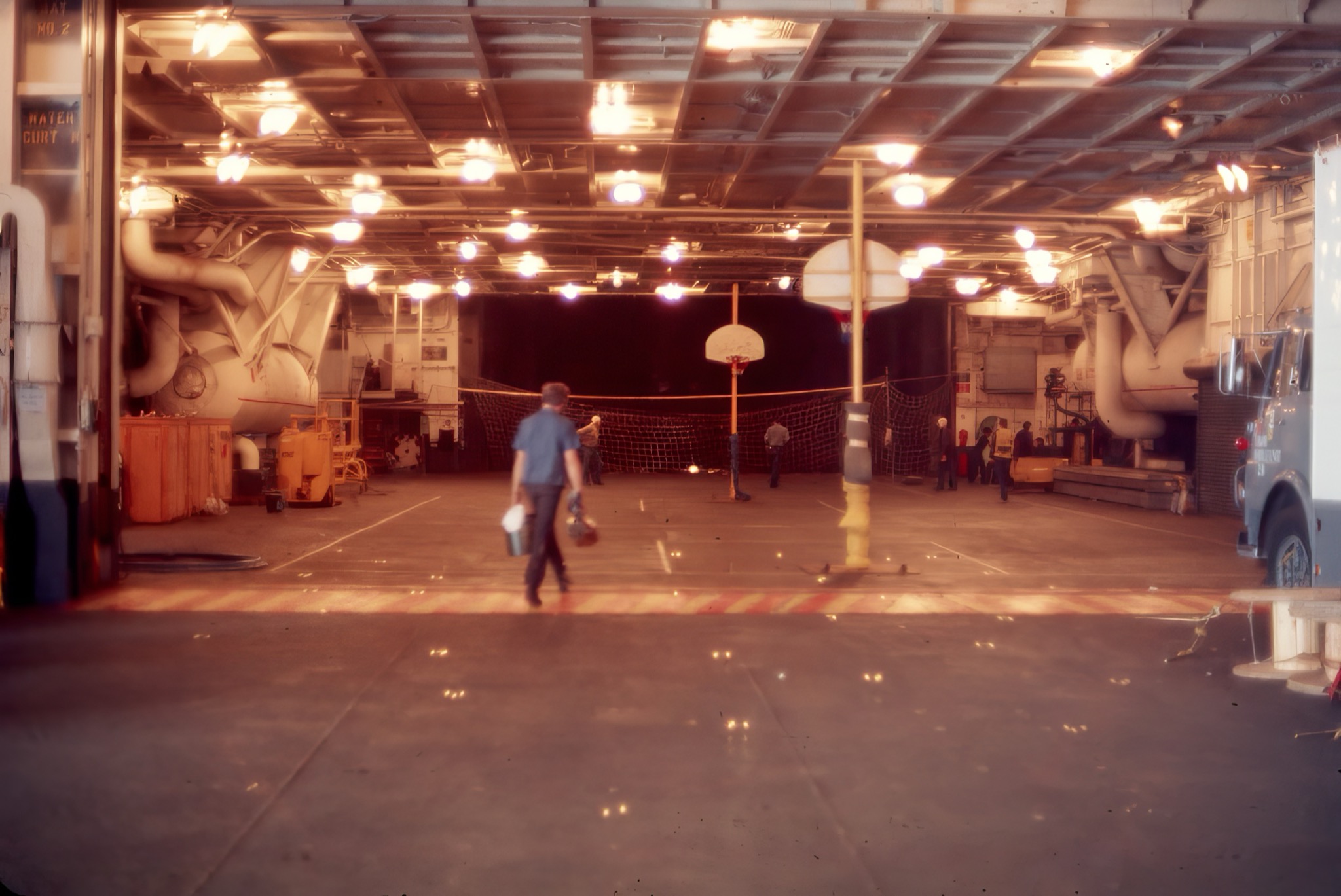
We played volleyball on the hangar deck in the evenings. It was strange to jump and come back down on a slightly different spot as the ship rolled. Don Mauldin broke his arm tripping over a tie-down wire.
I made friends with one of the CBS camera operators. As we rehearsed the process of getting the astronauts from the Apollo capsule on the starboard elevator to the labs, he told me where to stand. He said, “Stand here during this parade, and once the astronauts are in the lab I will pan to you and send your image to the whole world. Let your wife know and she can get an eyeful.”
There was a ham radio operator aboard to provide ship-to-shore communications, so I got in line, made contact with Kathy, and explained the TV offer. She was at her parents’ house for the duration and somehow missed the live broadcast of the splashdown.
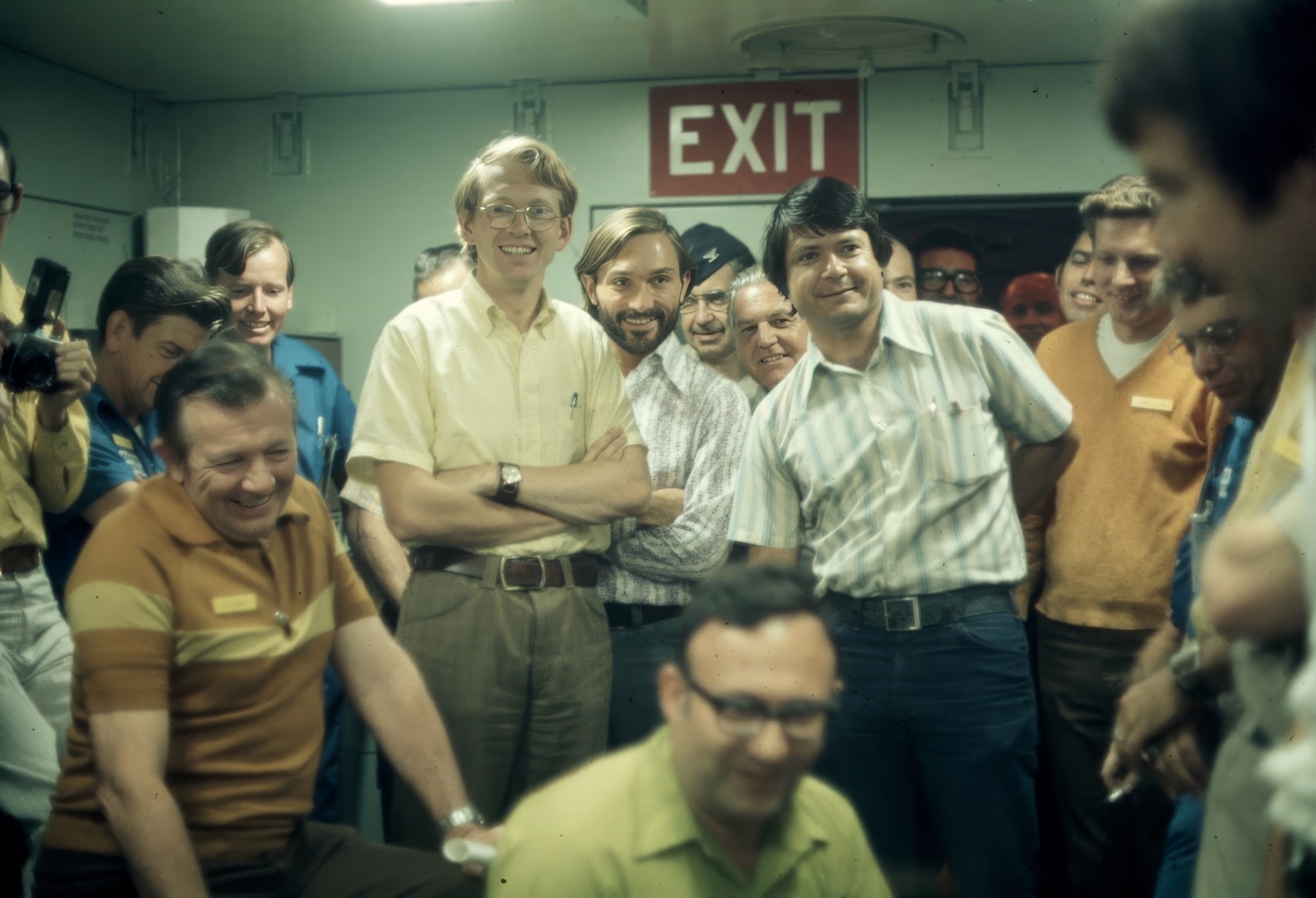
US Navy ships are famous for not allowing alcohol aboard. In defiance of this rule, the physician who ran the hematology lab stored several bottles of hooch in his ultracentrifuge for our mutual consumption. There was a Kool-Aid dispenser in the wardroom with paper cups. It was always there and we could get ‘bug juice’ any time, night or day. The cups were about 8 oz or so and absolutely sturdy. The Navy had been very careful in acquiring millions of these cups fleet-wide. The glue that held them together was really good — and, as it turned out, really alcohol-soluble. When we tried to have a post-dinner cocktail in the blood lab, our cups disintegrated in our hands and the hooch ended up on the floor. This led to a stampede the next day to the ship’s store to get souvenir Tico ceramic cups and mugs.
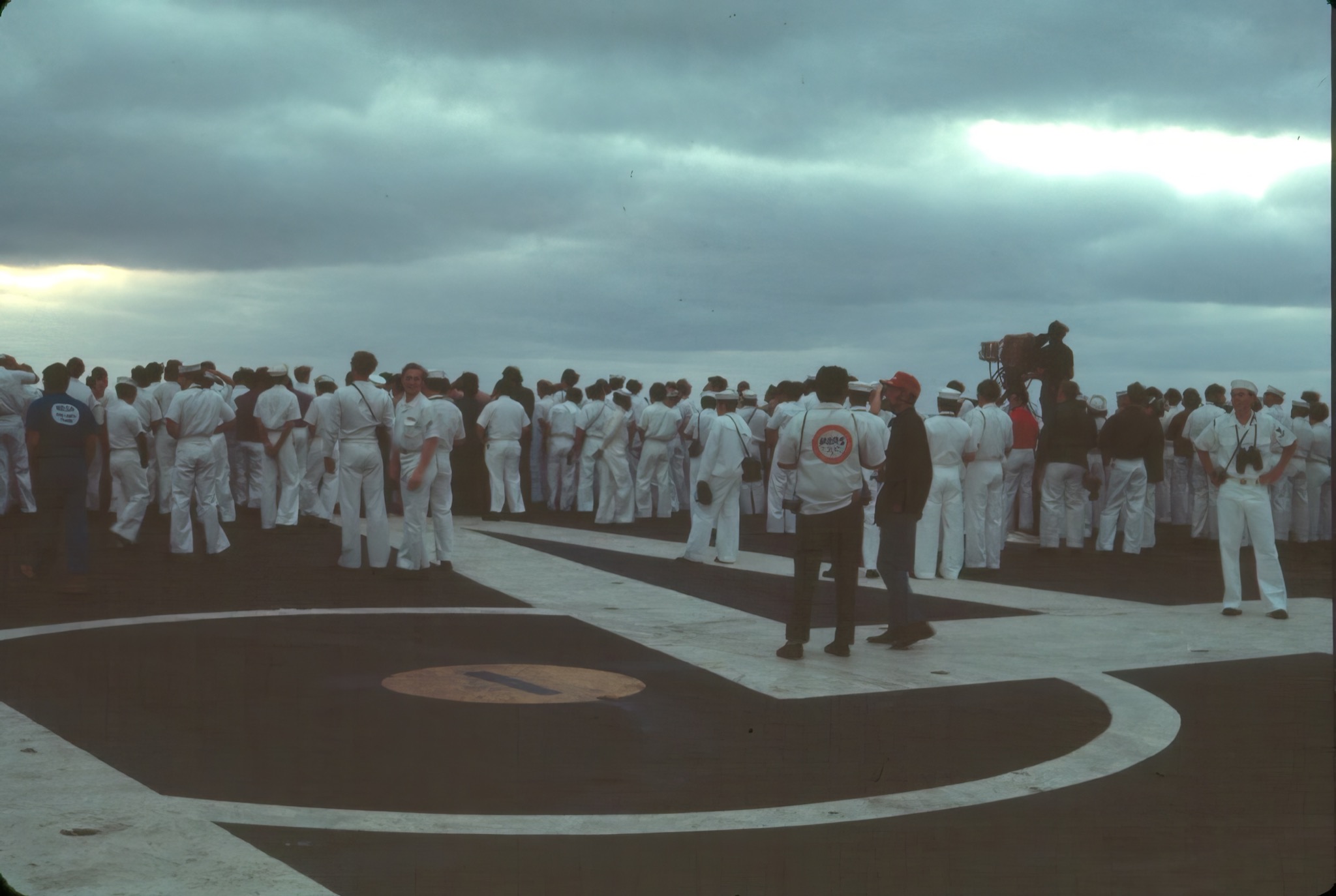
We were all up very early on splashdown day to watch this historic event and begin our work on the postflight testing. It was exciting but then routine.
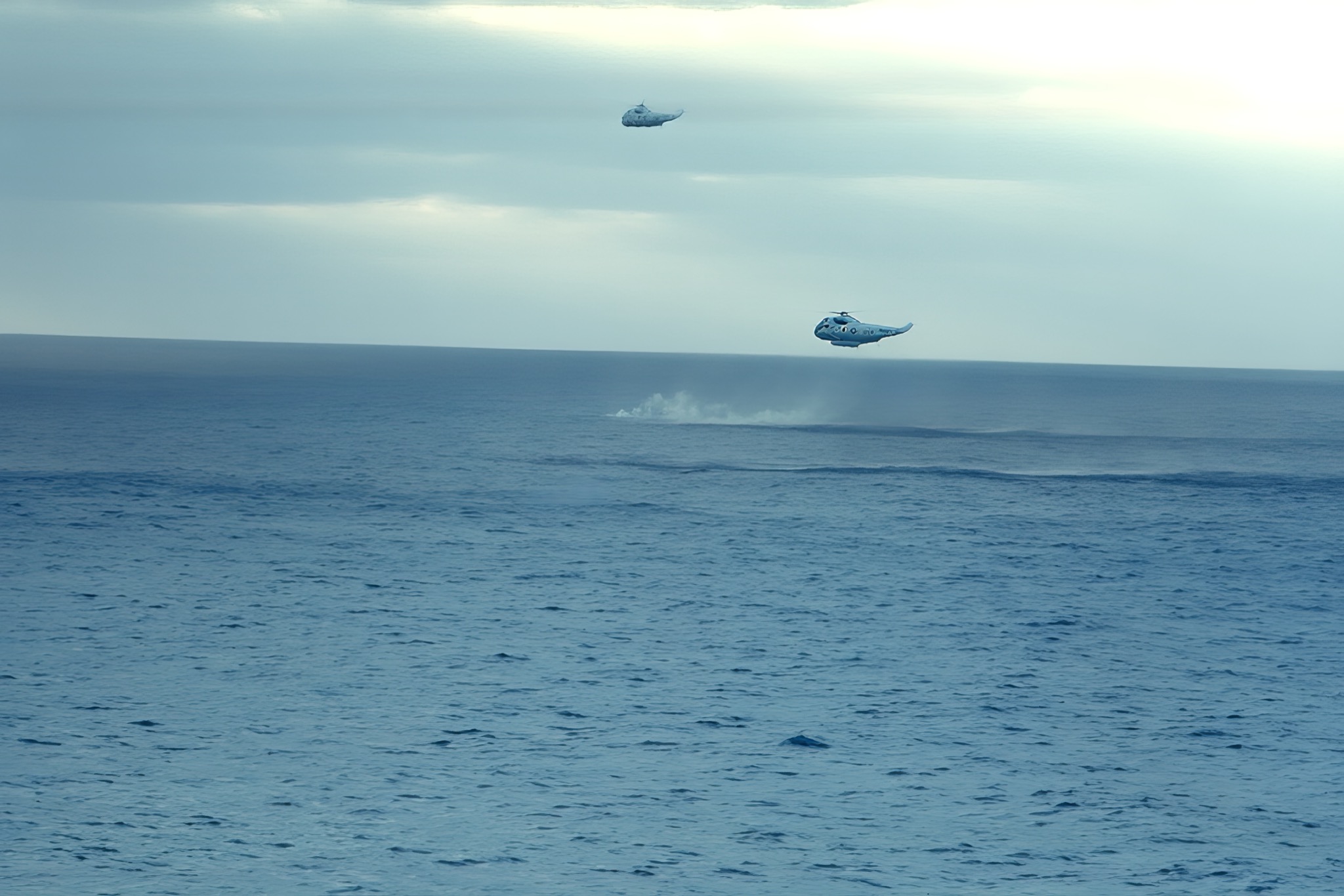
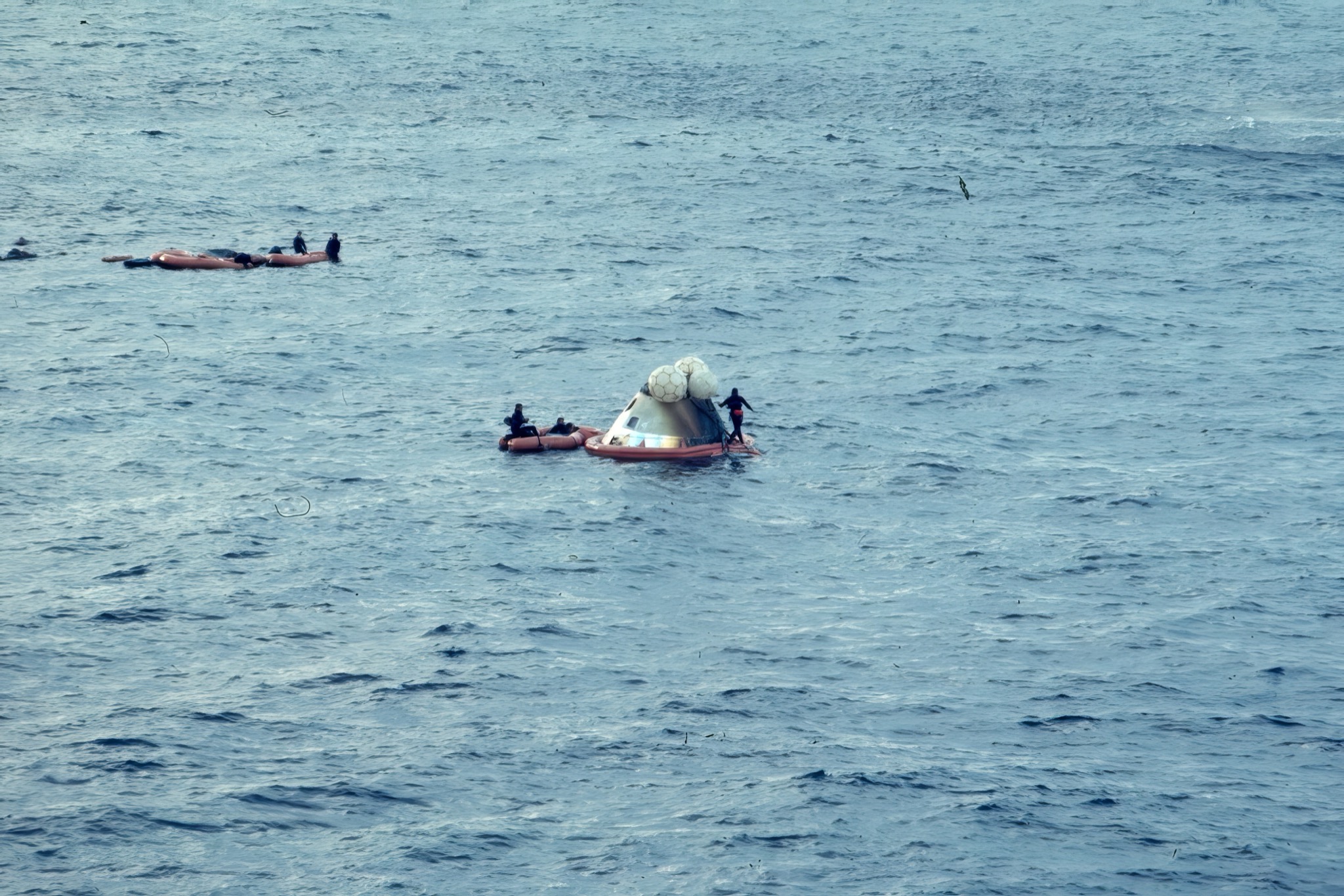
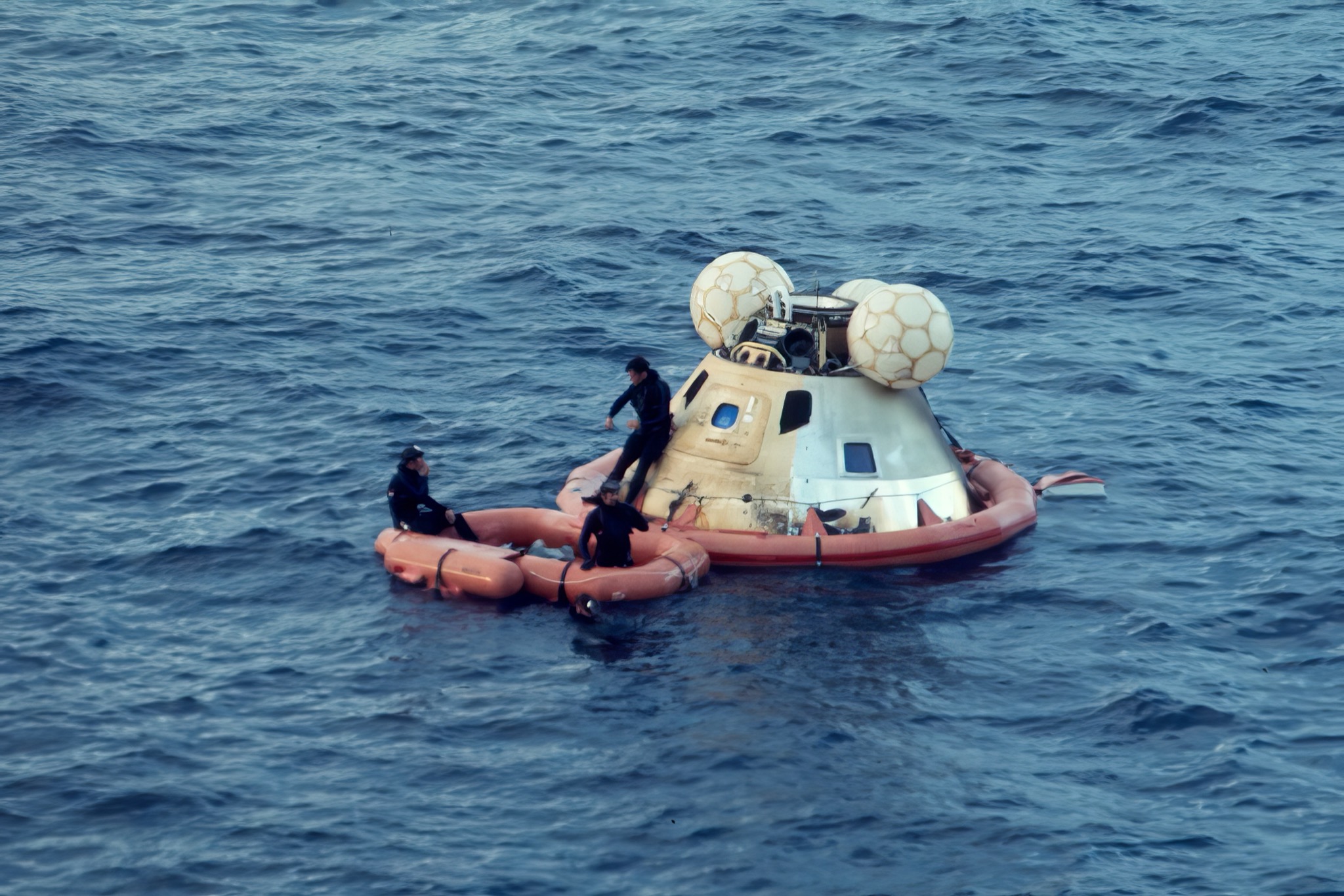
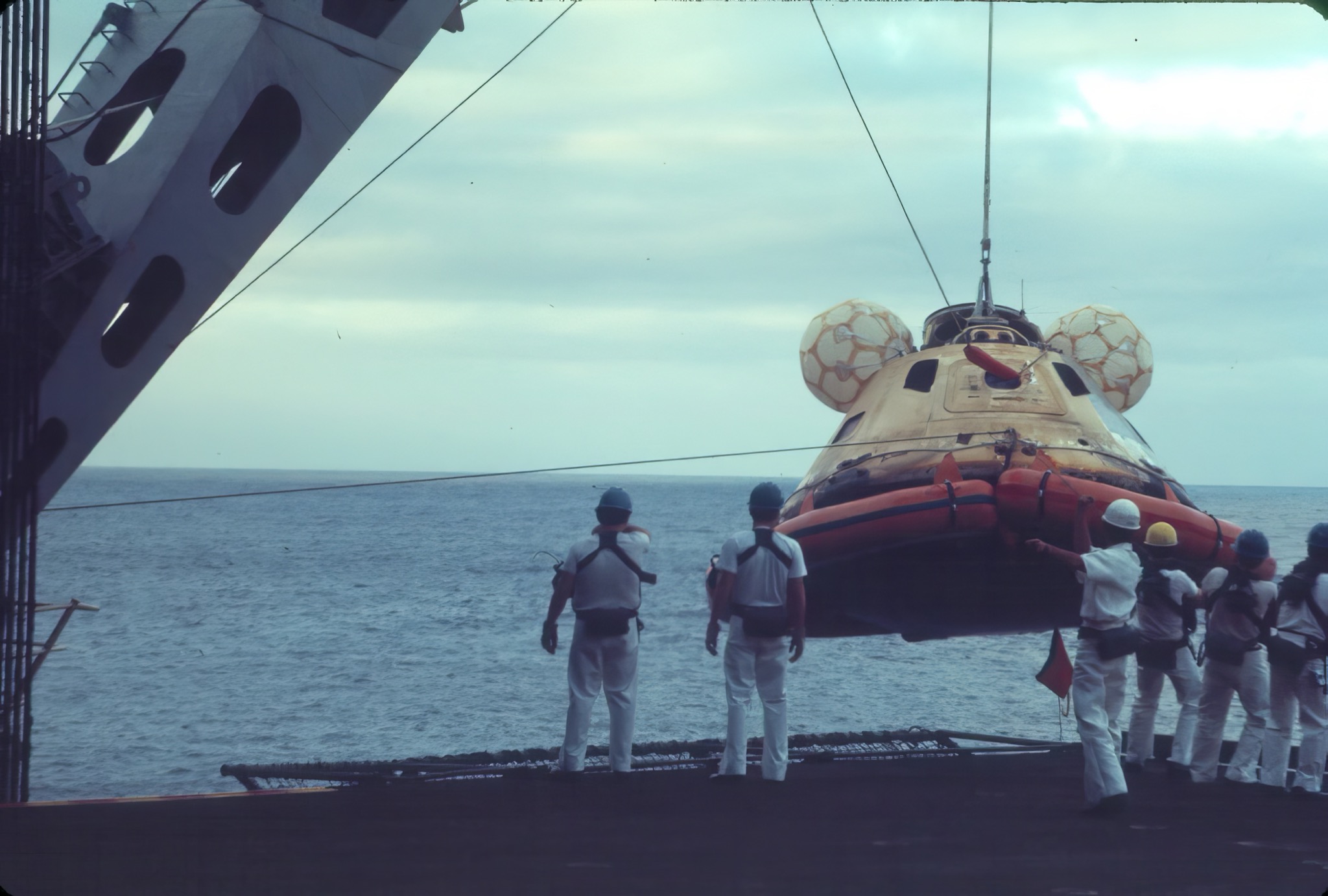
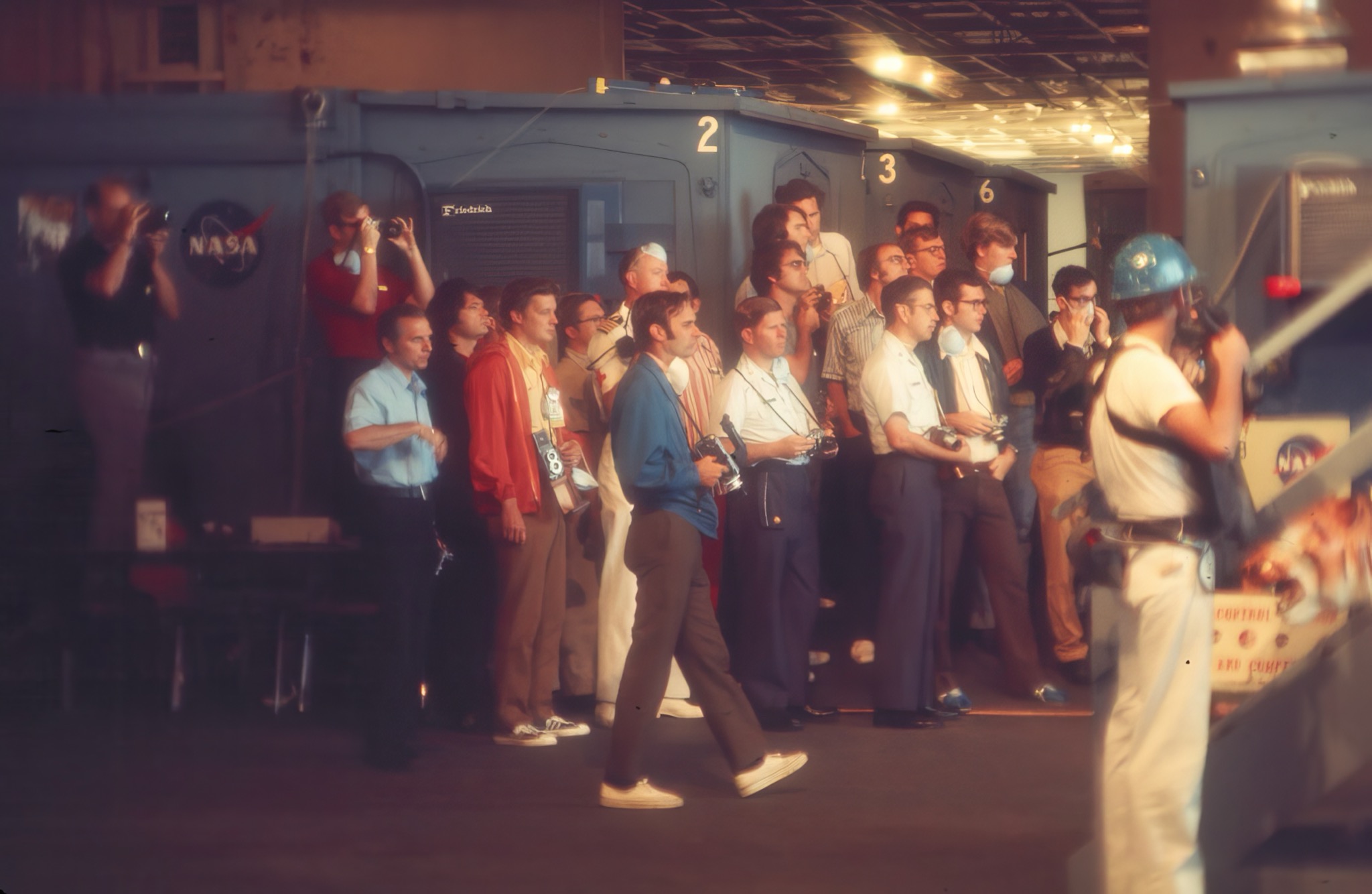
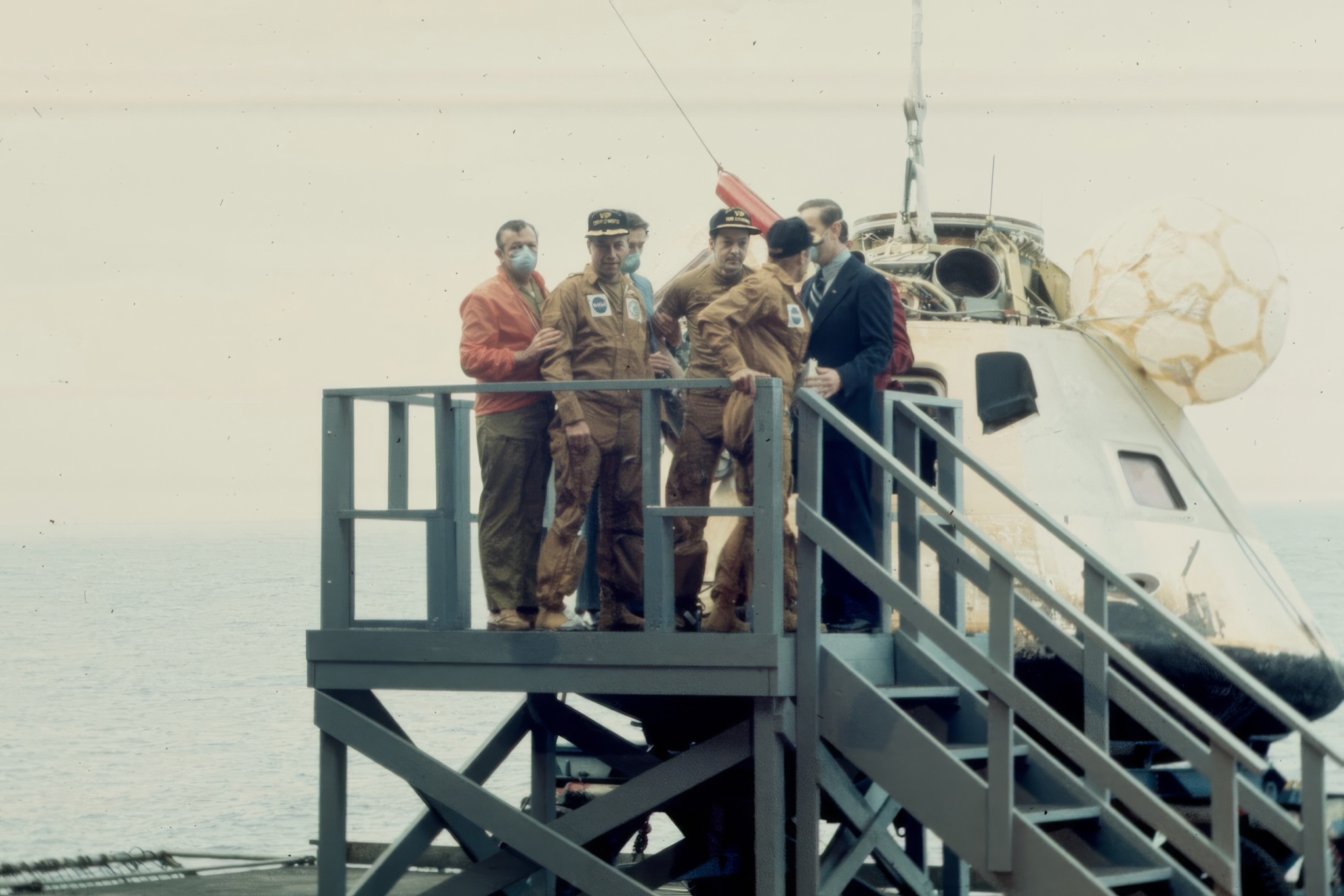
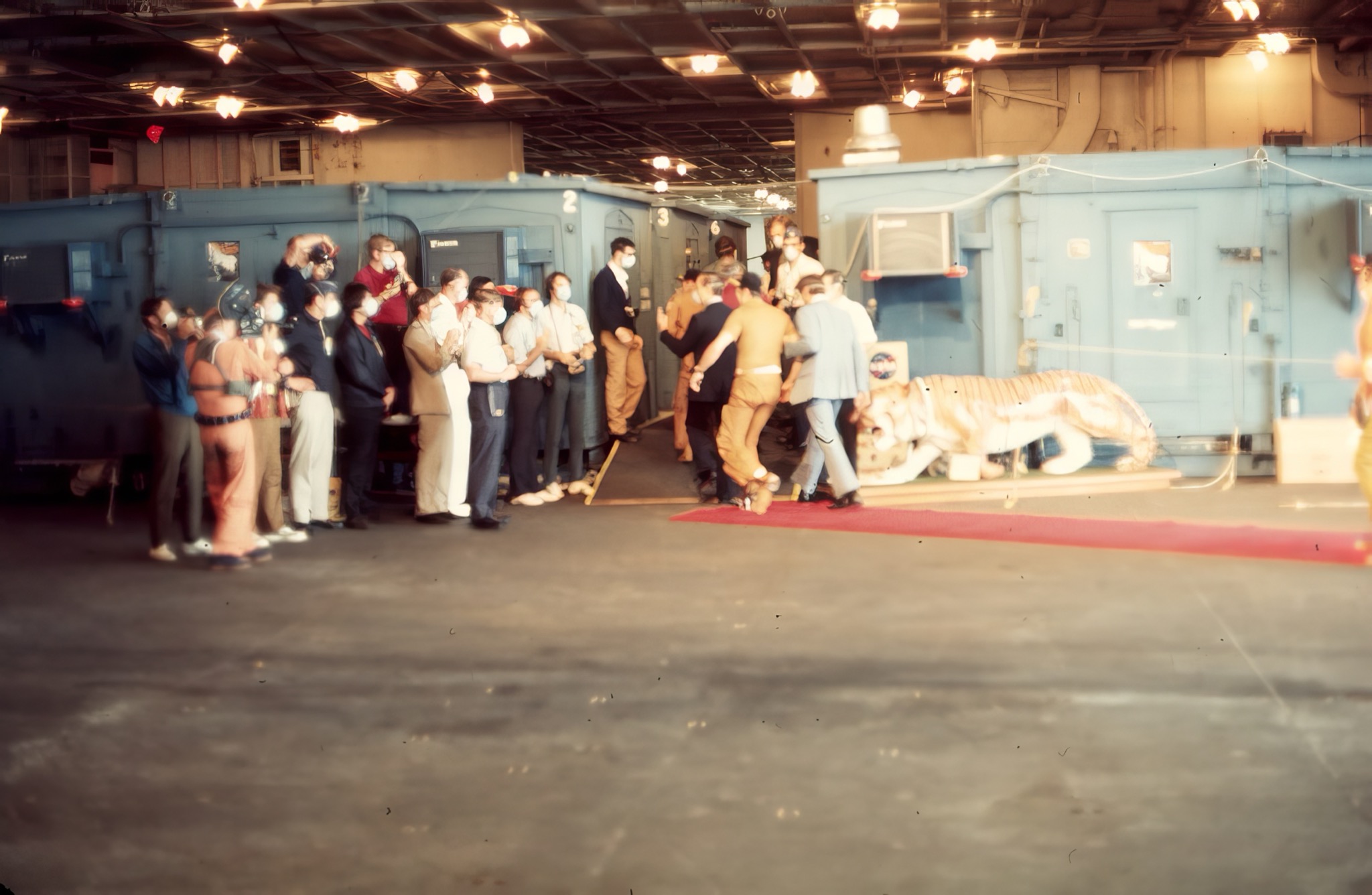
The postflight lab tests drove the astronauts’ agenda. They went from lab to lab in a predefined sequence and did everything asked of them, mostly without complaint. This was the price of their E-Ticket ride. Finally, the three Skylab astronauts — Pete Conrad, Joe Kerwin, and Paul Weitz — were taken to the admiral’s quarters in the Tico’s island. Having their first exposure to a non-weightless environment in 30 days, as well as reentry, splashdown, recovery, guinea-pig testing, and so on, they were fatigued.
While they rested we viewed the capsule up close and personal. We were restricted from getting close to it until the pyrotecnics guys unloaded the hypergolic fuel from the reaction control thrusters.
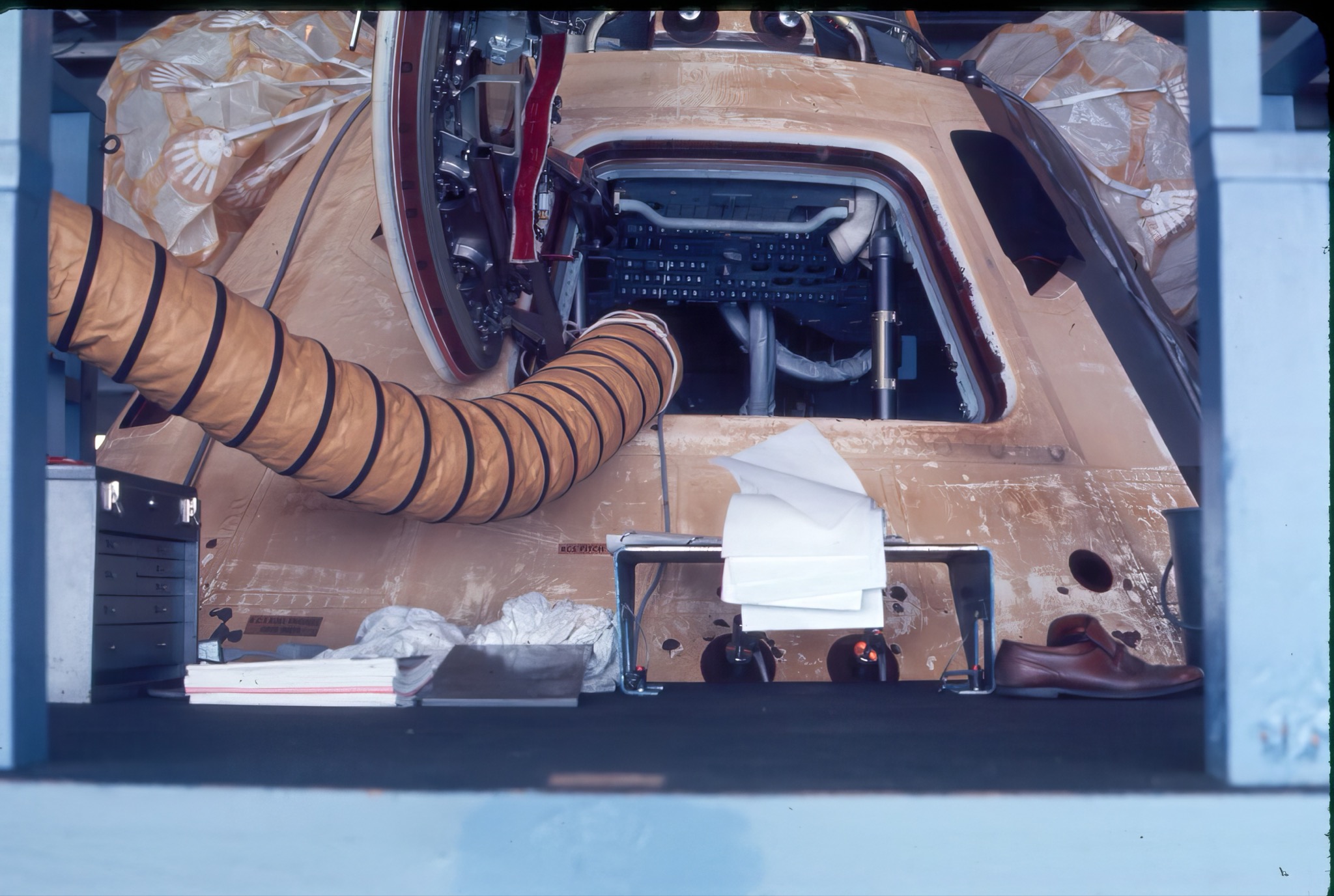
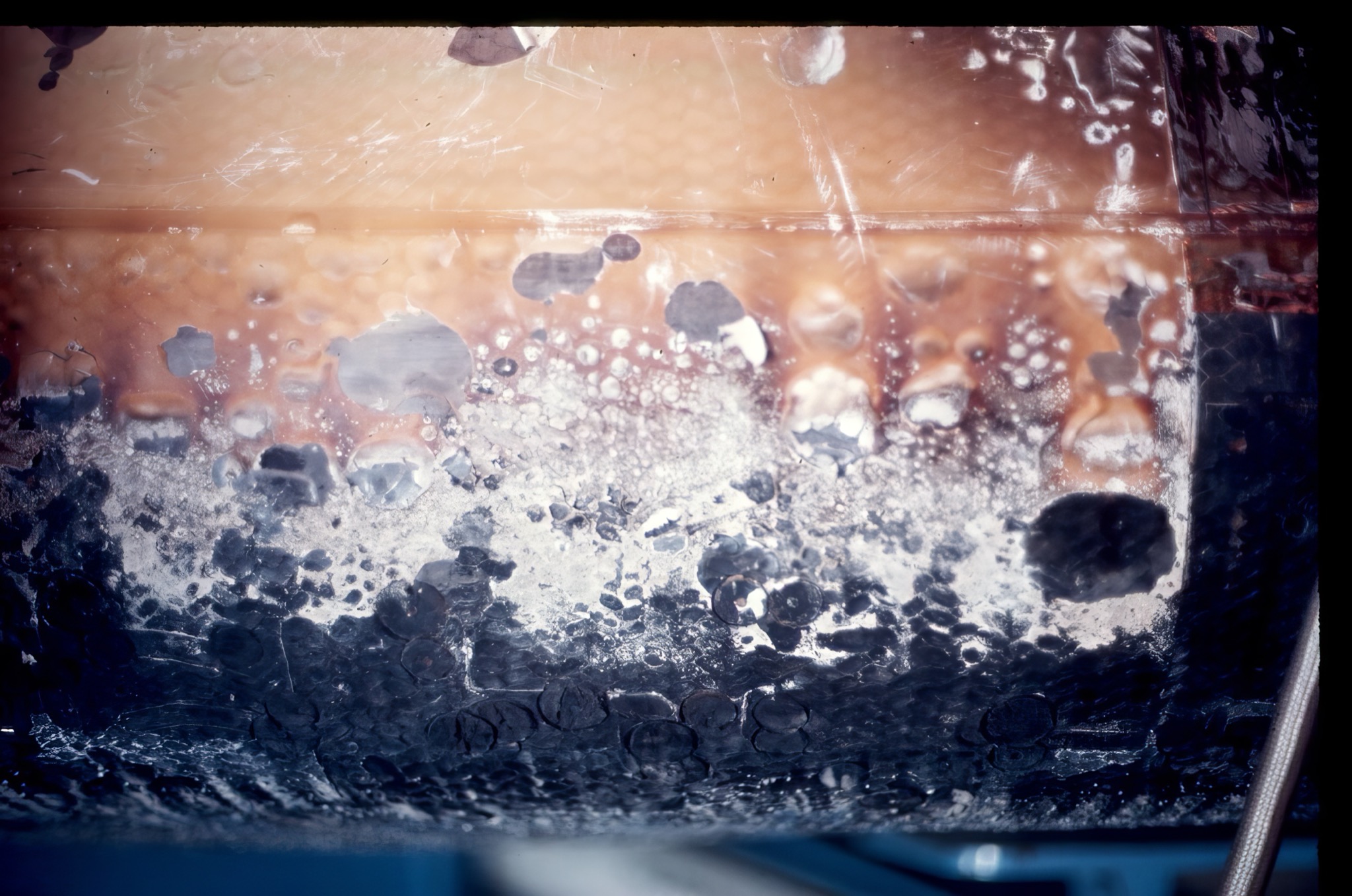
The powers-that-be had a great (from my point of view) idea. They needed a primary health contact to be an astronaut sitter in the admiral’s cabin overnight. This was a ‘low man’ job and I was chosen to take the 0400–0800 shift.
Pete, Joe, and Paul had gone into the admiral’s quarters in the early evening and crashed. They all three awakened about the time I went on duty. There were some approved snacks for them, as well as approved liquid refreshment, and they had no other demands, so I got to sit with them and hear Skylab stories for four hours. How great was that!
The best story was one told by Pete Conrad, mission commander.
Pete was notorious for an excess of expletives in his speech. There was a notable paucity of live video on Apollo XII. I am told that was because of the risk of having to bleep out some of Pete’s ‘extra’ words.
I will use freaking in lieu of Pete’s actual gerund.
Quoting Pete: One of the freaking foods available to us was freaking creamed corn. I freaking liked the freaking creamed corn during our freaking menu selection activity. So I put freaking creamed corn on my personal menu every freaking day or so. Big freaking mistake!! The freaking creamed corn afforded to us on this freaking mission created a freaking lot of freaking gas. Freaking fart pills. I was freaking jet propelled around the freaking vehicle. {Nods and laughs from Joe and Paul.} If I never see freaking creamed corn again in my life it will be a freaking bonus!
The four of us were ROFL (except that ROFL had not been invented yet).
During my time aboard I visited the bridge several times. The more junior officers who had the conn were also great at answering questions. Two facts I learned will be relevant in the next vignette. The view forward was limited by the flight deck and anything closer than about 300 yards was obscured. Also, from cruising speed on the order of 25 knots, it would take more than a mile to do an emergency stop — and it would not be so good for the running gear.
We arrived back in San Diego on a Sunday morning. The channel was lined with pleasure boats out to watch the spectacle. The crew was in their whites lining the deck as the ship’s band played. It was pretty amazing.
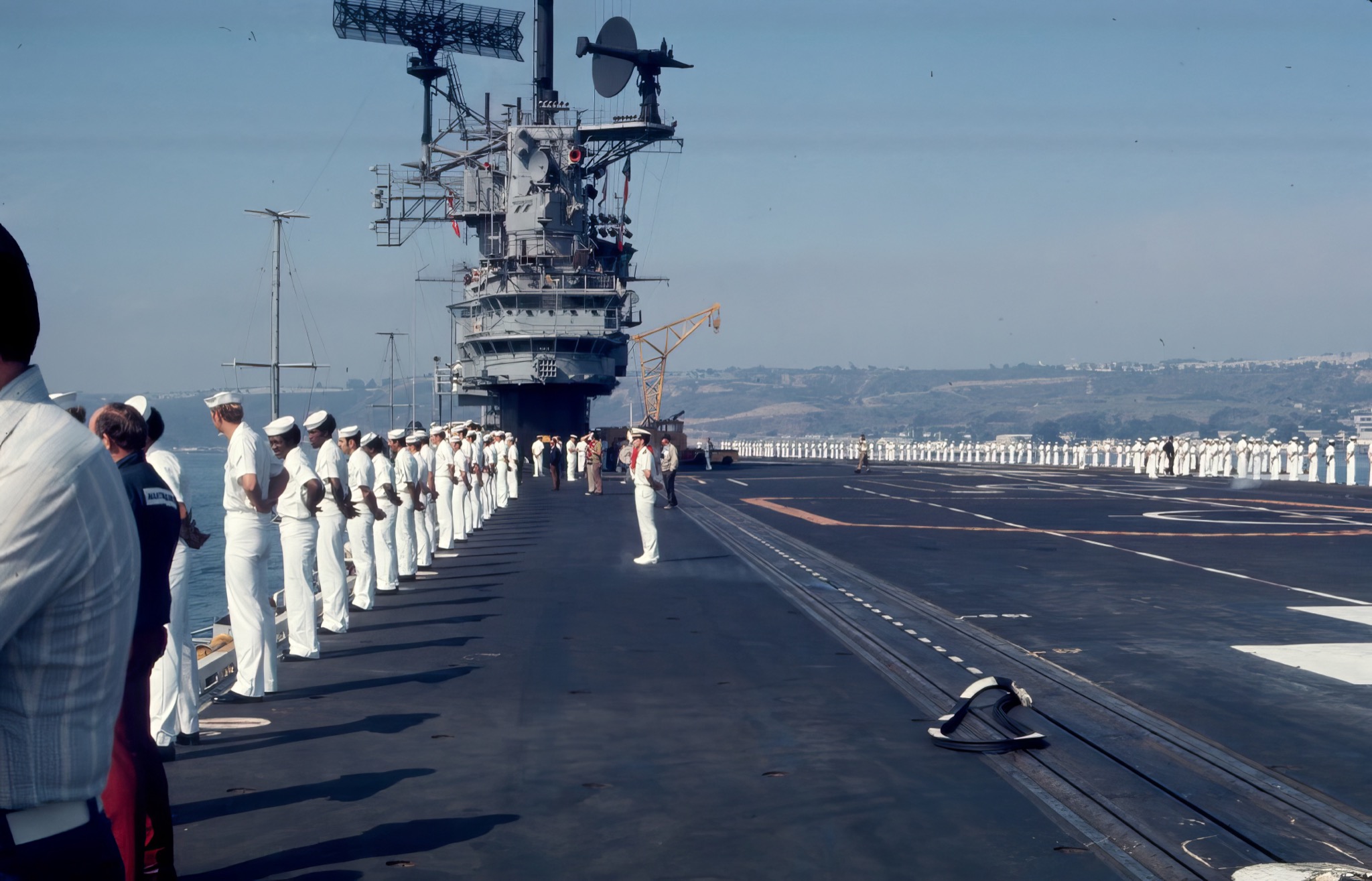
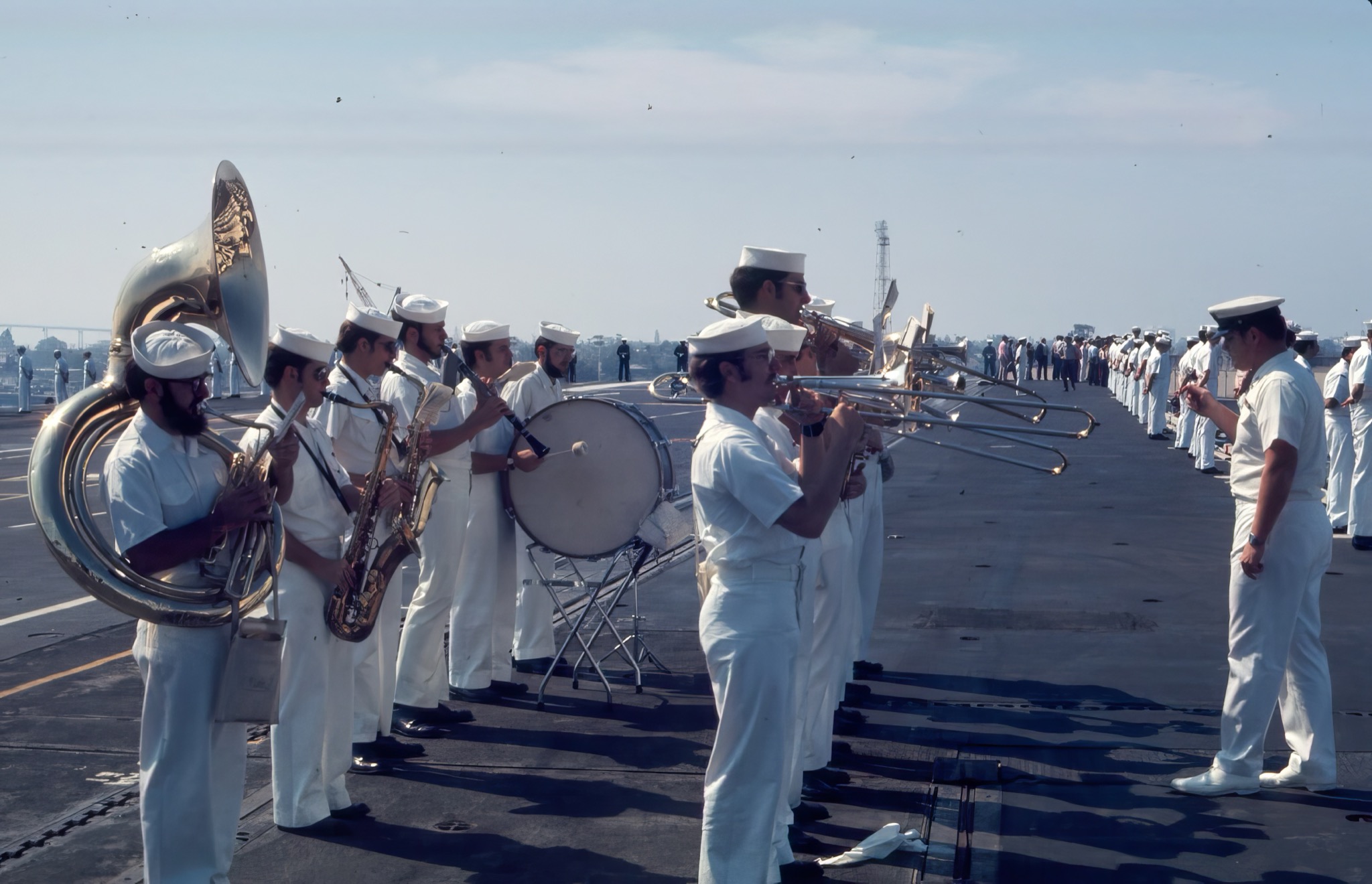
There in the middle of the channel ahead of us was a guy in a small fishing boat who had leaned back and fallen asleep. We were bearing down on him. The ship’s horn sounded — no response. It sounded again. He woke, saw his peril, jumped to his outboard, and began pulling on the starter rope like his life depended on it — oh, yeah, it did. His arm was a blur. The motor caught and he scrambled away from the channel.
We docked again at Coronado Island. Nice welcoming crowd. This was the last operational cruise for the venerable Tico — next stop the breaking yard, followed by the razor blade factory.
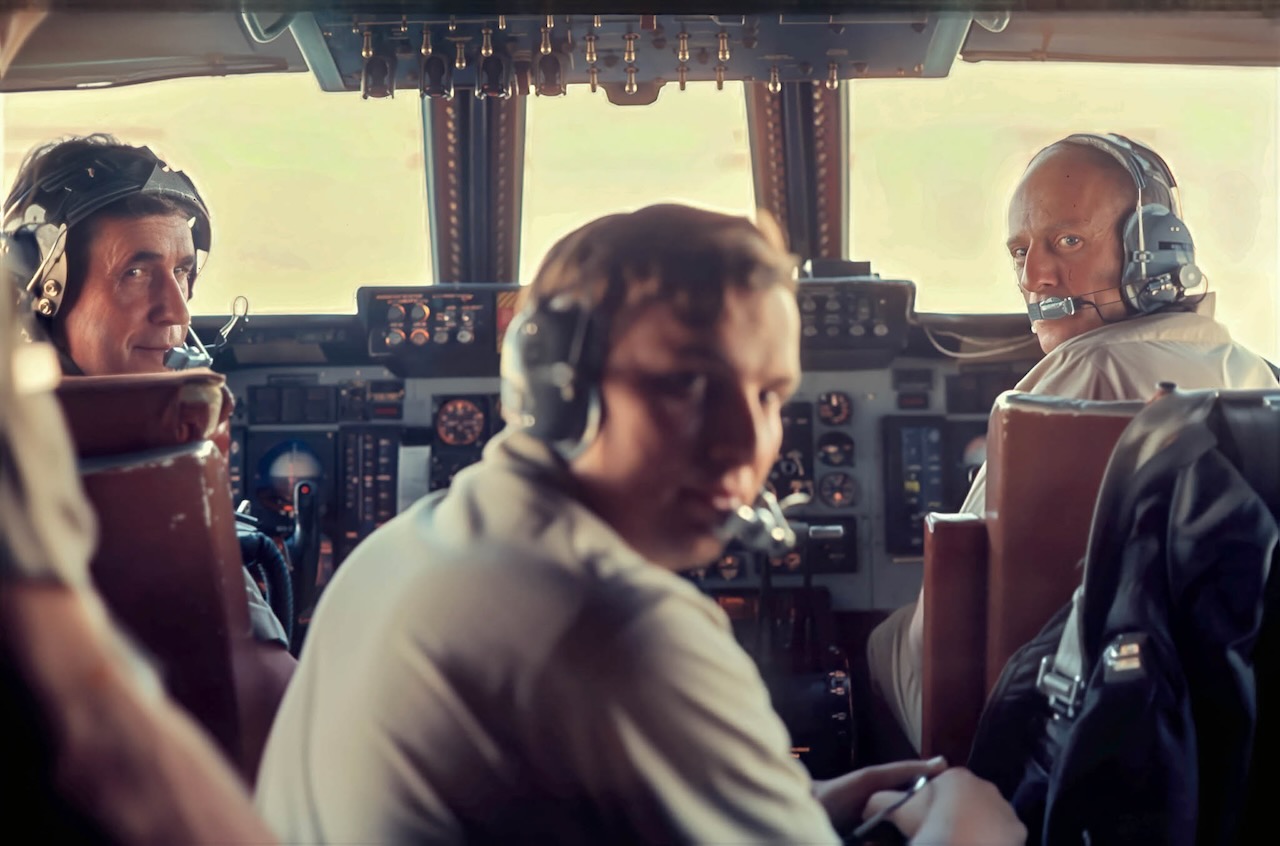
NASA had laid on an Air Force C-141 to get the ship riders and, oh yeah, the astronauts back to Ellington. On the flight back, Pete Conrad could not resist some flight time.
A bunch of memories that probably will not be covered in Chasing the Moon.
Leave a Memory or Comment
Have a story to add or something to say about this one? Don would love to hear it.