Crawdads
The Idylwood yard was not level. There were high spots and low spots. When it rained, the low spots filled with water (more on that later). Almost instantly, and I still do not know how, the little puddles would be punctuated by Crawdad chimneys.
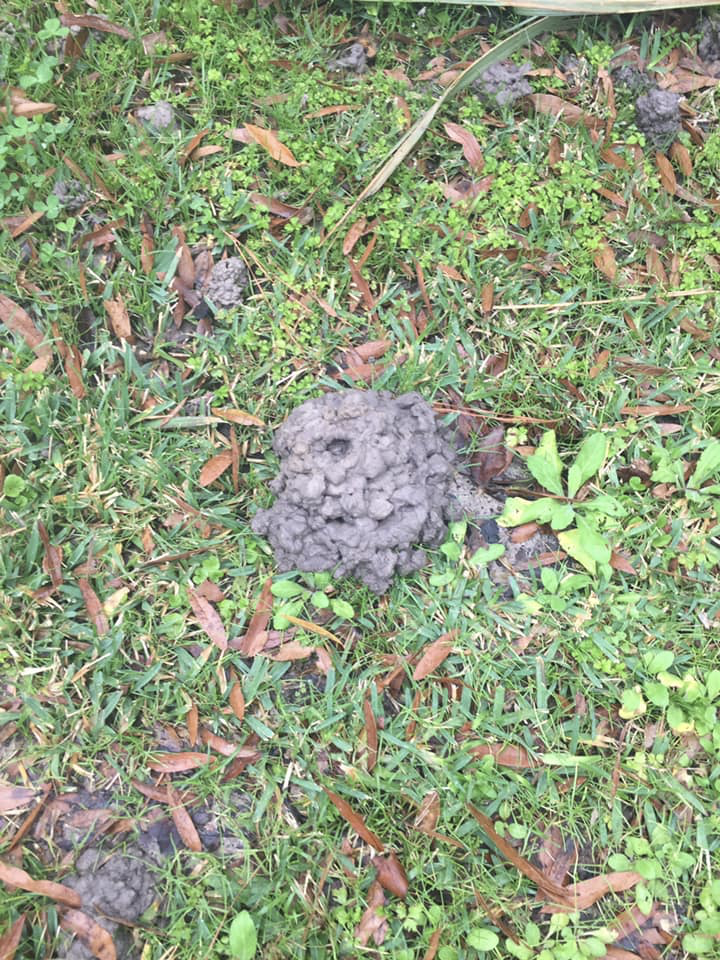
And…the puddles would have several crawdads puttering around. These were also known as crawfish - and they are a delicacy in Louisiana.
We would catch them, play with them, avoid their pincers and probably through our abuse, kill them. But, they were a distraction each time we had a gully washer.
The rest of the story Number 1: The investor in the company I was a partner in in the ’70’s (Unicomp) was a Texas wildcatter named Louis Newitt. He drilled gas wells in the area to the west of Houston and was relatively successful.
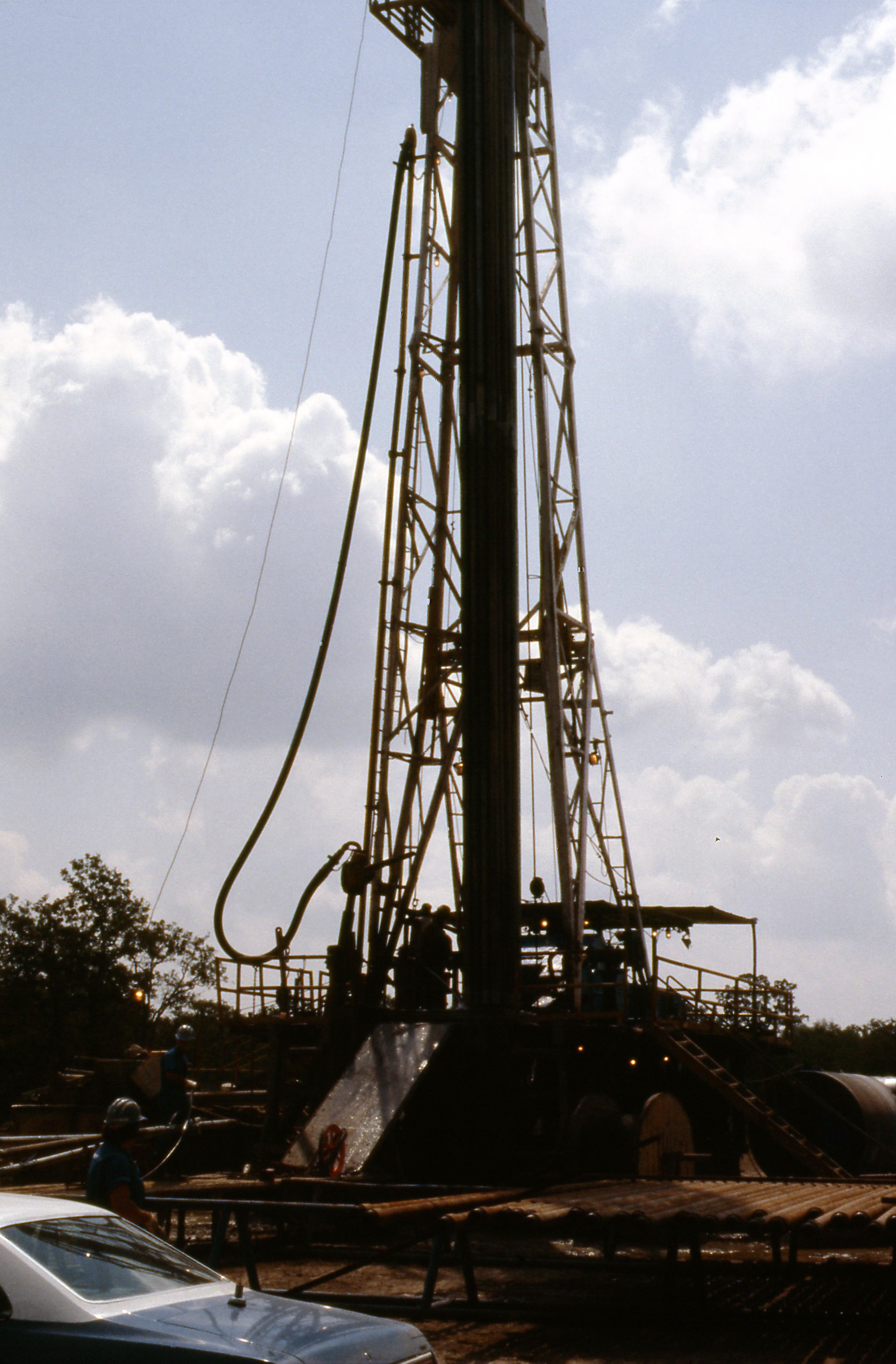
He was at a well site and the well was being logged. During the logging process the drilling crew extracts the drill string from the well and lets the logging team (in this case Schlumberger) do the logging operation.
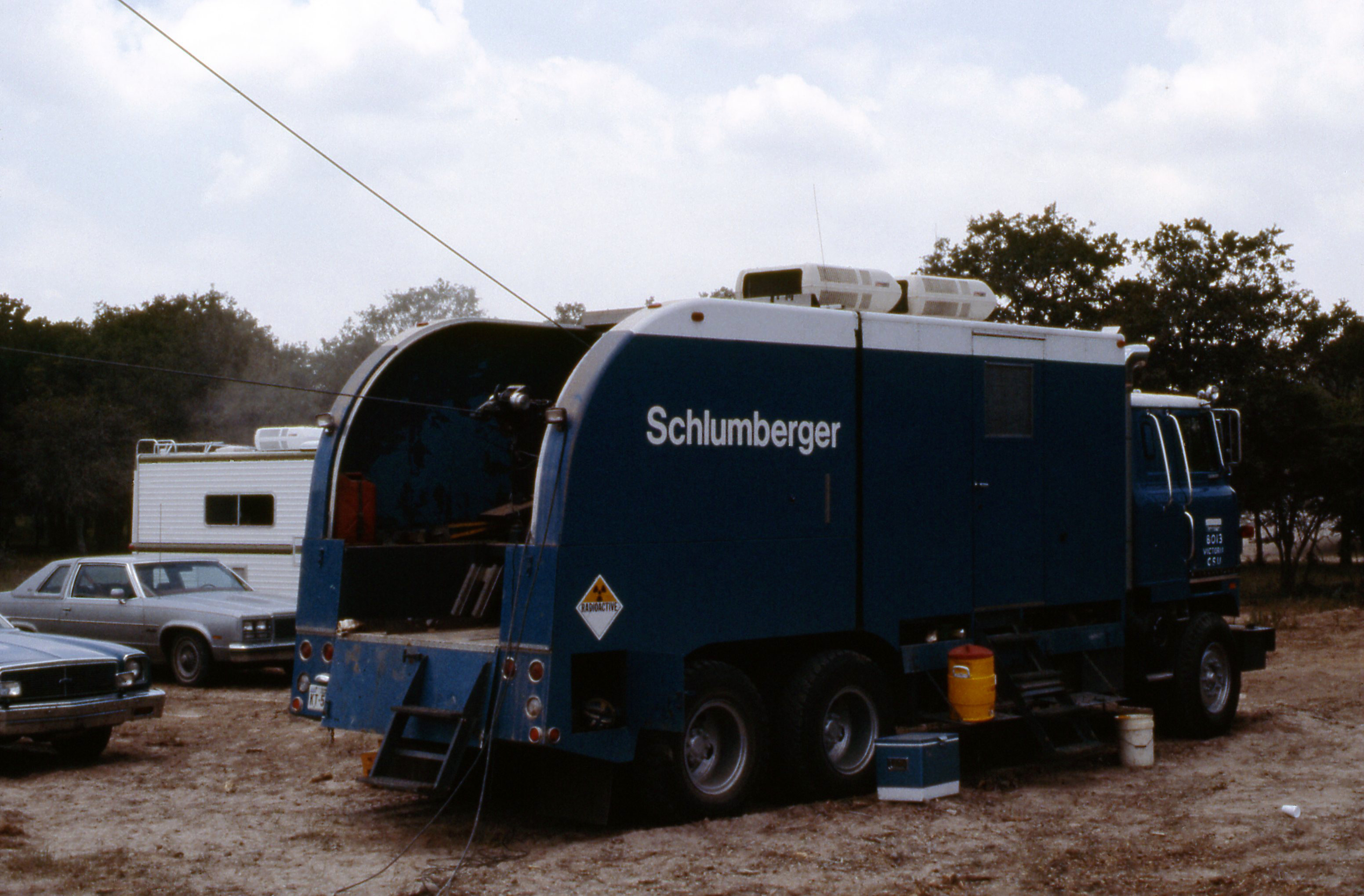
This is the logging truck with the wireline leading from the cable bay of the truck to the top of the drilling rig.
The drilling crew is relatively idle at this point. This particular drilling crew was from Michigan of all places. There had been a ‘toad strangler’ the previous night and the prairie had crawdad chimneys in abundance.
The drilling crew asked what they were and Louis explained that they were produced by crawdads’ digging and damming their hole. They asked what a crawdad was and Louis explained that they looked like a miniature lobster. The next question was about their edibility and Louis raved about boiled crawdads. Clearly, the next question was how to catch them.
Louis described how he would tie a little bit of bacon on a string, dangle it down the chimney for a bit and then pull it back up with a crawdad clamped onto the bacon. (We used this same technique in our backyard).
The drilling crew scrambled for some string and bacon and headed out to a nearby chimney.
The tool pusher, who is the putative head of the drilling crew, and who in this case was a really large guy was the gang leader in this enterprise.
He was the one who dangled the string with the bacon down the tunnel in the chimney.
Imagine the scene: a big, strong, proud guy bent over a mud chimney with a string laden with bacon down the hole. He is surrounded by his crew all anxious to see what happens next. Louis was there as a local advisor.
Before the tool pusher pulled the string up, the phrase ‘snipe hunt’ flashed before his eyes.
Louis described how the tool pusher turned his head to Louis and said, ‘Mr Newitt, I am about to pull this string up out of this hole. If there is not a mini lobster on the end of the string, You are going into the hole, got it?’
Louis said that he was delirious to see a ‘mini lobster’ a few seconds later. They went on to collect quite a few and Louis led them in a crawdad boil.
The rest of the story Part 2: To level out the low spots, dad would occasionally order a dumptruck load of sand. He bought a wheelbarrow from Sears. The job was to load the wheelbarrow with sand, wheel it to the designated low spot, dump it and then spread the sand. Step and repeat until all of the sand was gone. When dad first started this, I was too young to be of much use. So I played in the dirt and got into a heap of trouble for tracking it into the house. As I grew my involvement with the dirt transitioned from play to move. Dad updated the process to improve the health of the yard. The new process was to rake leaves into the low spot and cover them with the sand. This made a mulched sand area that really seemed to grow grass well. I did like using firecrackers to blow things up in the sand pile.
Leave a Memory or Comment
Have a story to add or something to say about this one? Don would love to hear it.