Transistor Radio
The transistor was invented by Shockley, Brattain and Bardeen of Bell Labs in 1947, about a year after I was born. The transistor is the basis of microchips today so it is difficult to envision the progress from a crude junction transistor in 1947 to the megachips that are the foundation of our electronic infrastructure in 2021.
It took only a short a while for the transistor to move from the laboratory to the consumer market, but by the late 50’s portable transistor radios were for sale.
{Aside: All of the electronics used during WWII was based on vacuum tubes. The first digital computers were vacuum tube devices. That is why a computer with minuscule computational capacity filled a room and took a small power station to run it. WWII walkie talkies took up a backpack that was filled with vacuum tubes and batteries. Compare that to your cell phone today. Wow!!!}
The advantages of transistors was manifold: small size, high bandwidth, low power consumption and compatible with printed circuit boards.
The transistor was the ideal building block for a portable radio for consumers. I used my paper route money to buy an Emerson portable transistor radio:
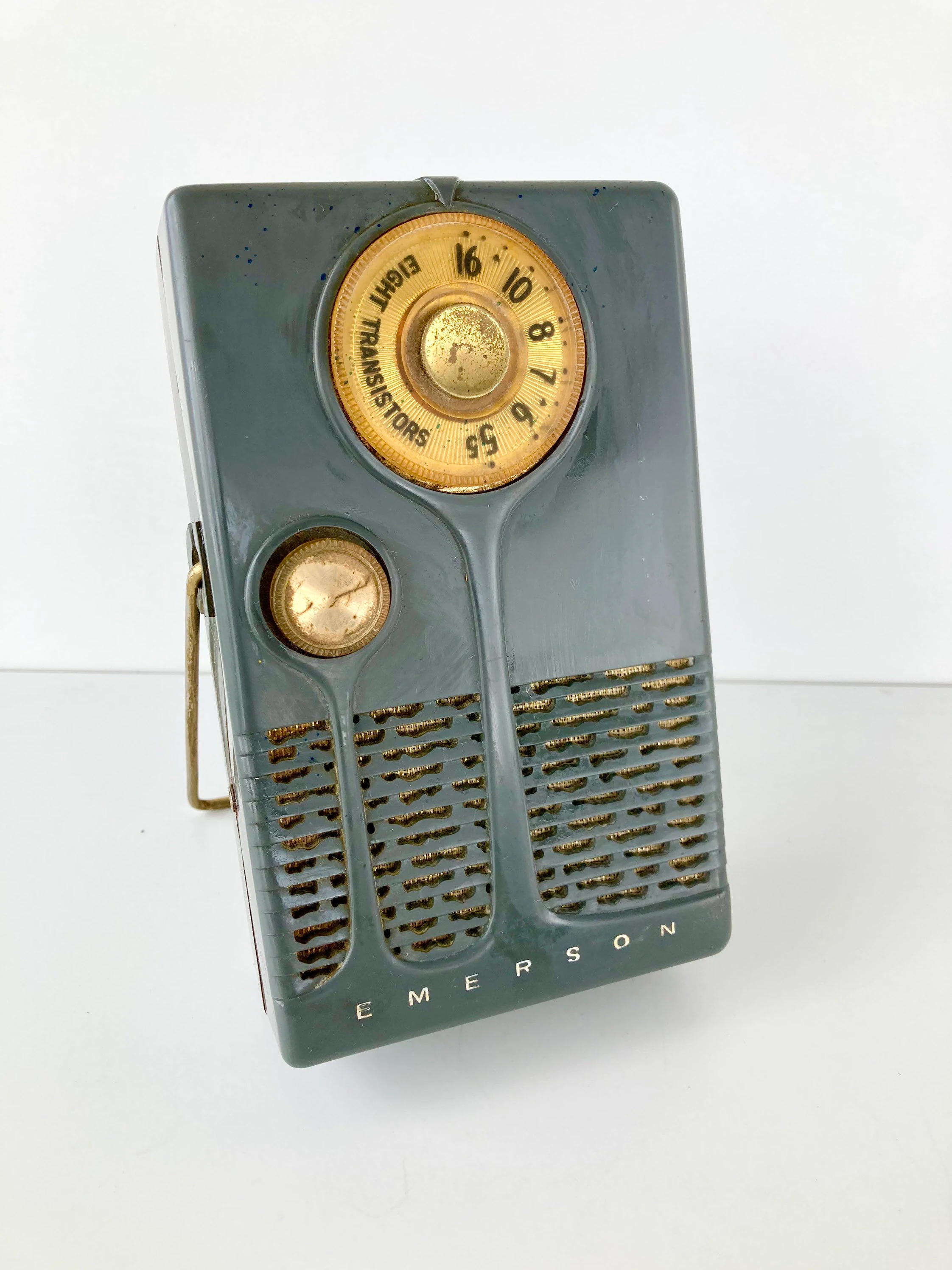
This is not my radio, but mine looked a lot like this. Note that it was an eight transistor model. The number of transistors was a key selling point. I do not recall the price, but I imagine that it cost on the order of $50. According to the inflation calculator that is over $400 in 2026 dollars - the price of a modest iPad. It came with a faux leather carrying case…‘cause it was heavy..
The heart of the transistor radio was the printed circuit board. This was a phenolic board with copper wiring etched onto one side and components mounted on the other side. The components were soldered to the copper traces and thereby connected to one another. {Aside: In the late 70’s and early 80’s I did some printed circuit layout for electronic devices I had designed.}t
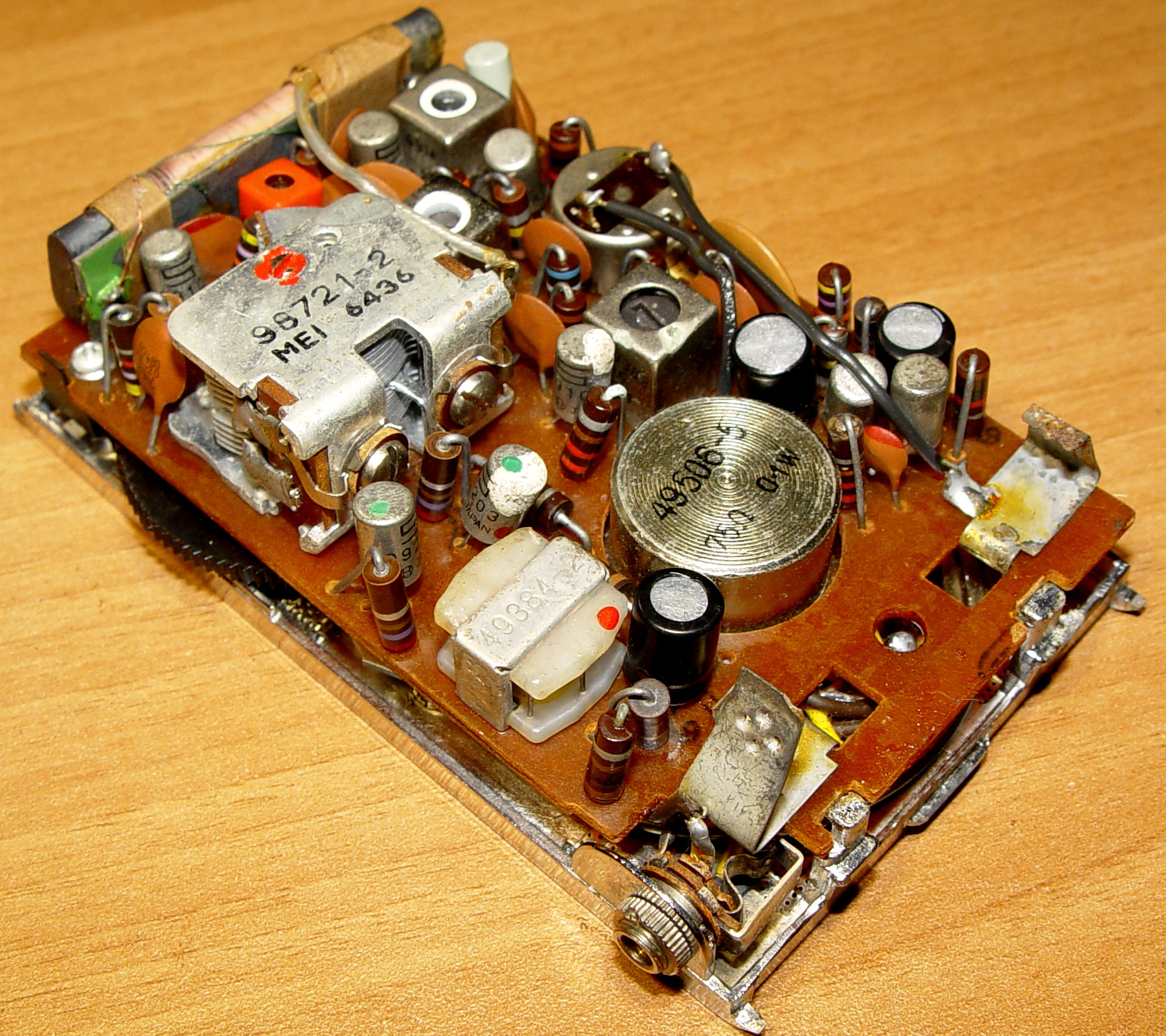
This is pretty much what the interior of my Emerson radio looked like. {Of course I looked at it. That is what a proto-geek does!} The shiny cylindrical devices are the transistors. It worked pretty well and I could receive the Beaumont radio stations. The two I remember most vividly are KFDM (stilll alive and working on the am band at 560) and KTRM (at 990).
This thing ate batteries like they were going out of style.
I used it on my paper route, both morning at 5AM and after school at 4PM. I would put it in my canvas bags with the papers I was delivering, crank the volume up and have the entertaining talk and music from the AM stations while I worked. {Aside: I still listen to radio during my morning walks. I have a Sansa Clip that plays FM only - as well as a glob of MP3 music - but I mostly listen to KTRH 88.7 NPR - to get the ‘voice of the liberal press’.}
I got complaints about the loud radio in the morning and had to revert to using an earpiece.
On KTRM in the morning was the Gordon Baxter show. He was a character. famous in Beaumont and a lot of fun to listen to. He was a pilot and I later read his columns in Flying Magazine, The Bax Seat…probably available on the Flying Magazine website. The column about dropping a cat from an airplane is a classic.
T
The Emerson was not built well enough to withstand being banged around and dropped. After falling from my canvas bag to the concrete for the nth time it stopped working. Yaaarrrggghhhh! $50 bucks down the tube. Not for the photo-Geek. I took it apart and discovered that the printed circuit board had cracked. When it cracked, the copper traces in that portion of the board were severed. I taught myself PC board repair and soon had the Emerson playing again.
When dad came home from the Philippines in 1961 he brought a National transistor radio he had acquired in Japan.
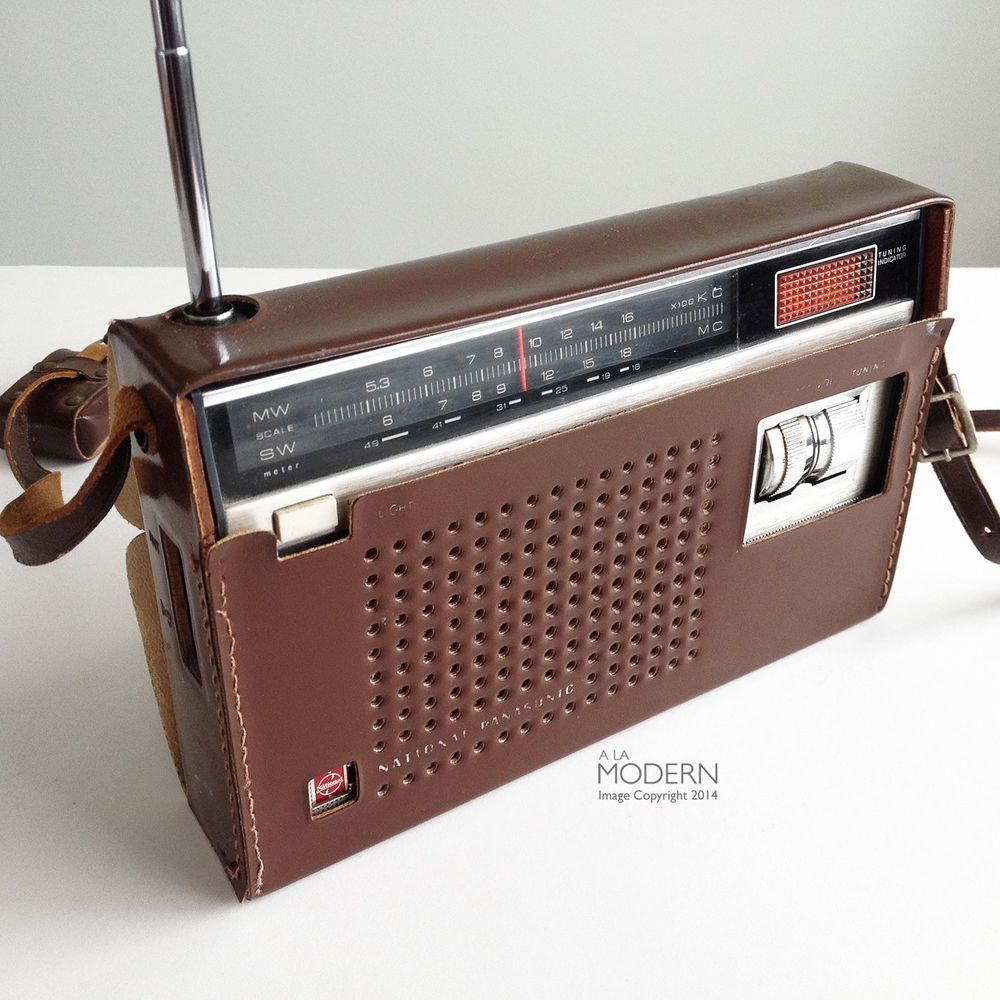
Again, this is not it, but this is what it looked like, even down to the faux leather case. National was the Japanese brand name of Panasonic. This was a good radio that held up for many years.
Leave a Memory or Comment
Have a story to add or something to say about this one? Don would love to hear it.