Library Fines
Library fines are an interesting thing to look back on. My first library experience was the Tyrrell Public Library in downtown Beaumont. My mom took me there during my early elementary years, maybe in the summer when school was not in session. My most intense memory of this period is climbing the amazing circular staircase to the Children’s Library on the second floor.
I have no recollection of dealing with library fines during this epoch of my life.
The next library experience I recall is the weekly or biweekly visit of the Bookmobile to Edwards Elementary: a library on wheels in an un-air-conditioned, school-bus-type vehicle. This is just about how I remember the one from Beaumont. The walls were lined with books and we seem to have entered by the right front door and exited past the checkout desk at the rear.
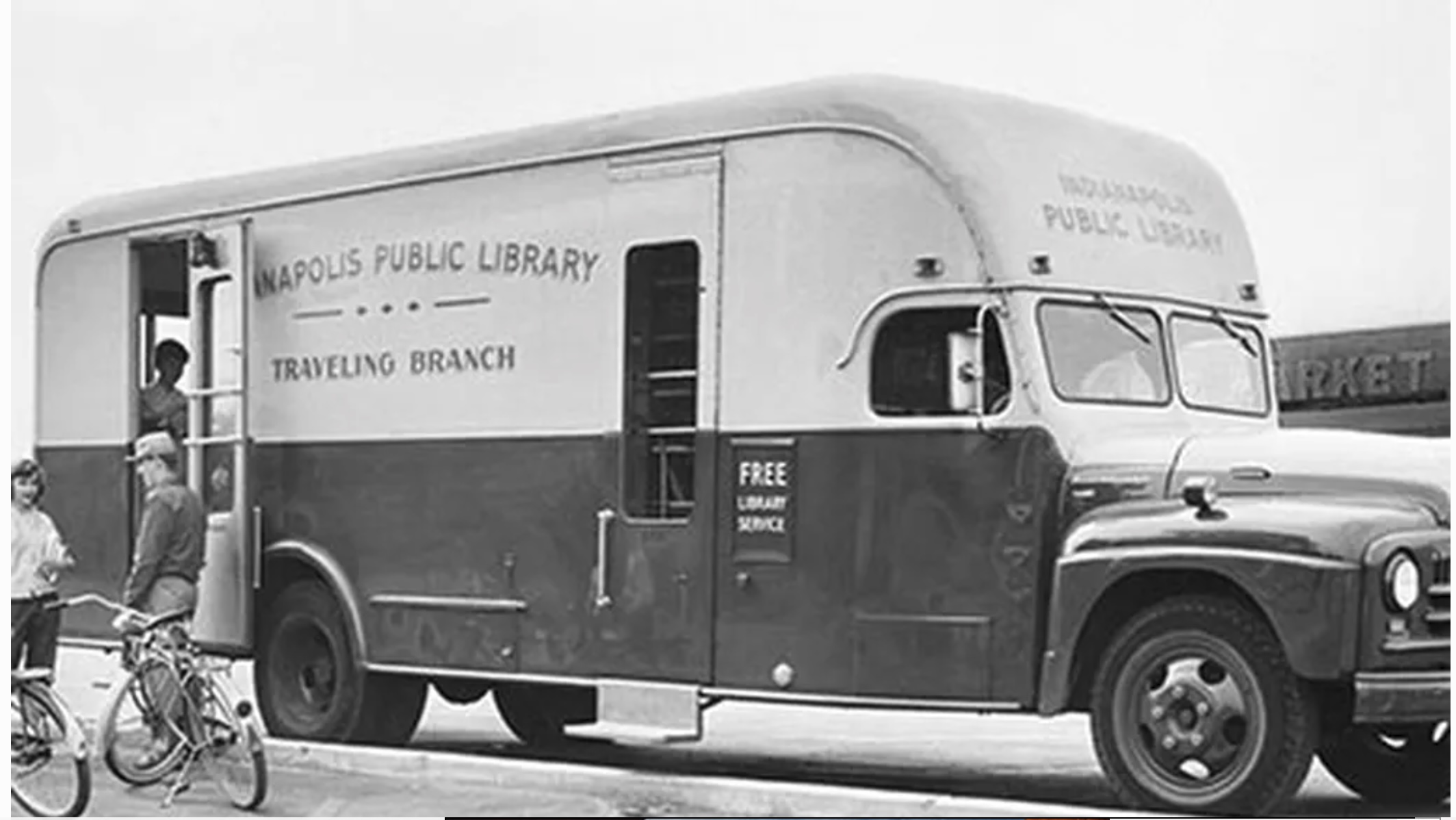
When I started working at the Tyrrell Public Library as a paige at 12 or 13, I was exempt from library fines. Cool! What I recall was the elaborate measures for checking out books and dealing with fines for overdue returns.
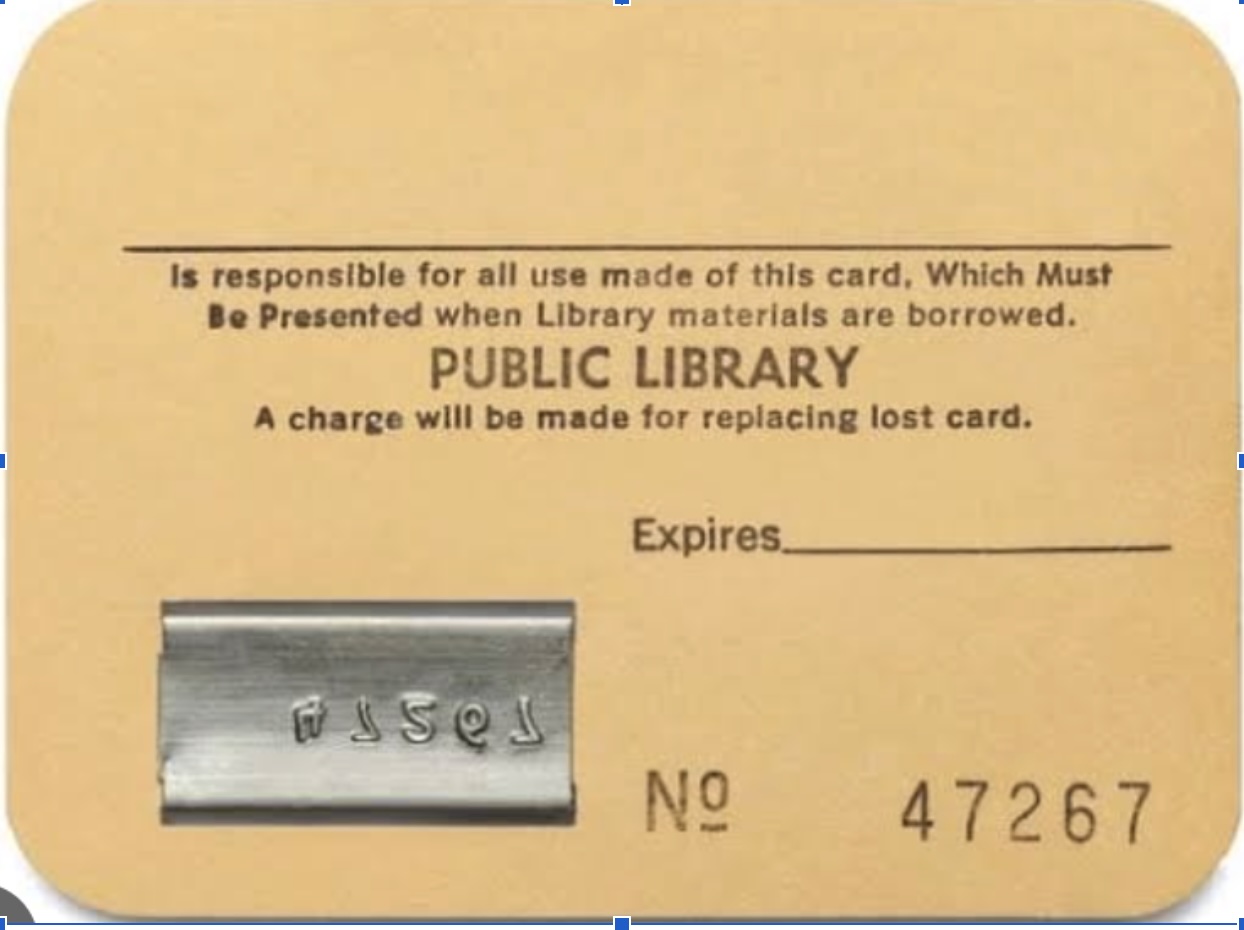
Our library cards carried a metal plate with an embossed subscriber number.
There was a pocket inside the front or back cover of the book with the “library acquisition card” that identified the specific book. There was also a form to have a date due stamp applied.
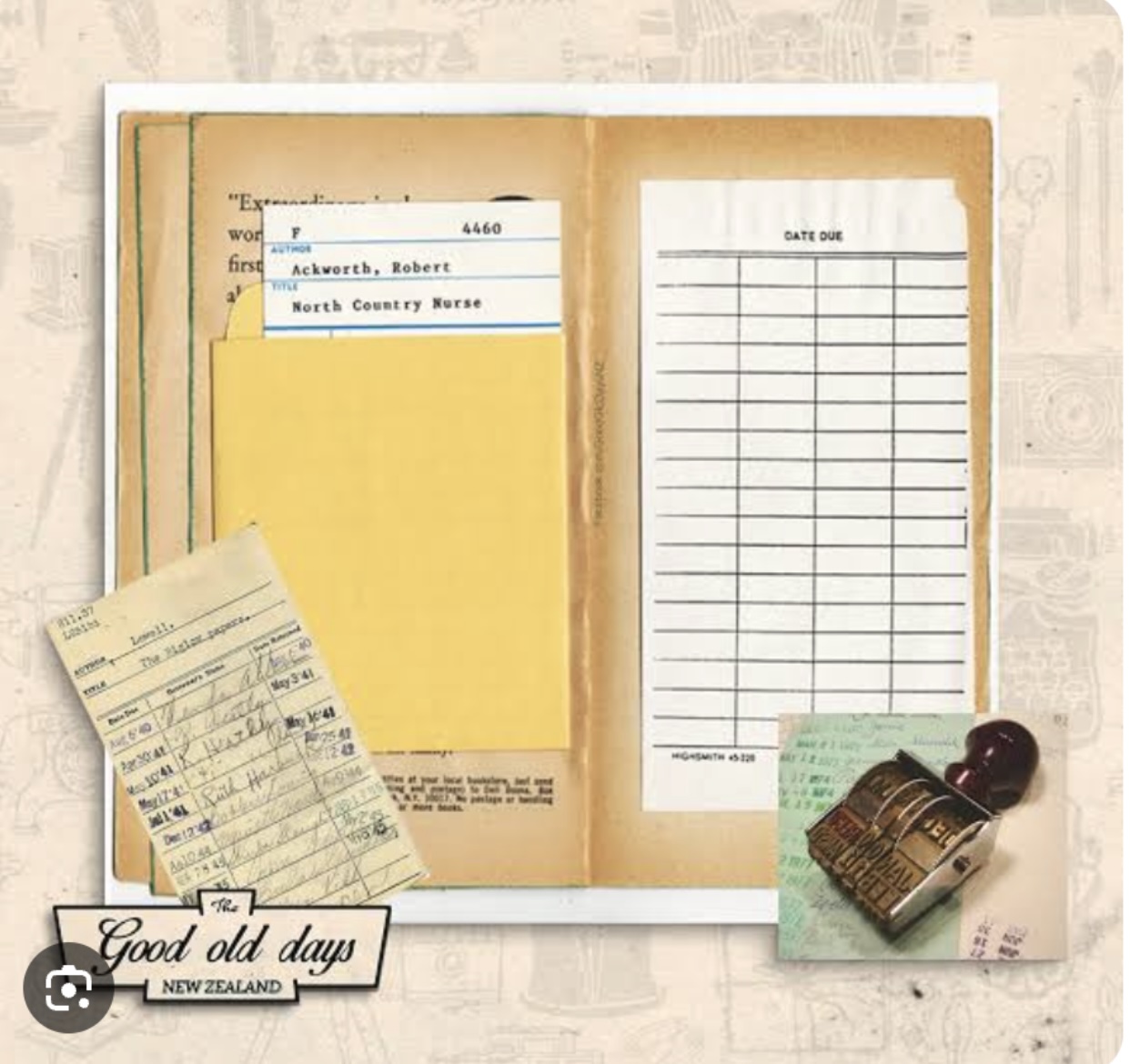
When a book was returned to the library, the acquisition card was replaced in the book, and it was placed on a cart for the page (me) to return to the stacks, the bookshelves where the library collection lived, that is the books not checked out -duh.
This process was interrupted if the book was overdue, while the fine was computed and collected. The fine was two cents a day per book. The check-in staff were continually handling very small amounts of cash in coins. There were all sorts of stories about large fines, greater than the value of the book, for example.
I have no idea what happened to books long overdue, or about suspension of library privileges for miscreants who ignored their fines.
One of my jobs was to collect the books from the outdoor book return depository, which looked like a large mailbox. I do not remember what they did about overdue books that came in from that source. I do now understand why there were always two or three women staffing the checkout desk.
So were the fines a disincentive to keeping a book too long, or just a disincentive to borrowing books in the first place?
Between BookStop from the ’70s through the ’90s and Kindle since then, I have not been a library borrower, so I had no idea what happens with fines today. So I looked it up. It turns out the librarians eventually asked the same question I did.
In January 2023, the Houston City Council voted unanimously to make the Houston Public Library “fine free.” By then, about a quarter of all HPL cardholders owed fines, and most of that money had been on the books for years. The library’s own conclusion was that fines didn’t bring books back on time; they mostly kept people away, especially those who could least afford them. Harris County’s libraries followed a month later. And when Houston wiped the slate clean, more than 21,000 items the library had written off as lost came back through the doors, something like $425,000 worth of books.
So the answer to my question seems to be the second one. I suspect the ladies at the Tyrrell checkout desk would have been glad to be rid of all those pennies.
Leave a Memory or Comment
Have a story to add or something to say about this one? Don would love to hear it.